R (Halliday) v Parole Board: factual errors and flawed reasoning lead to quashed decision
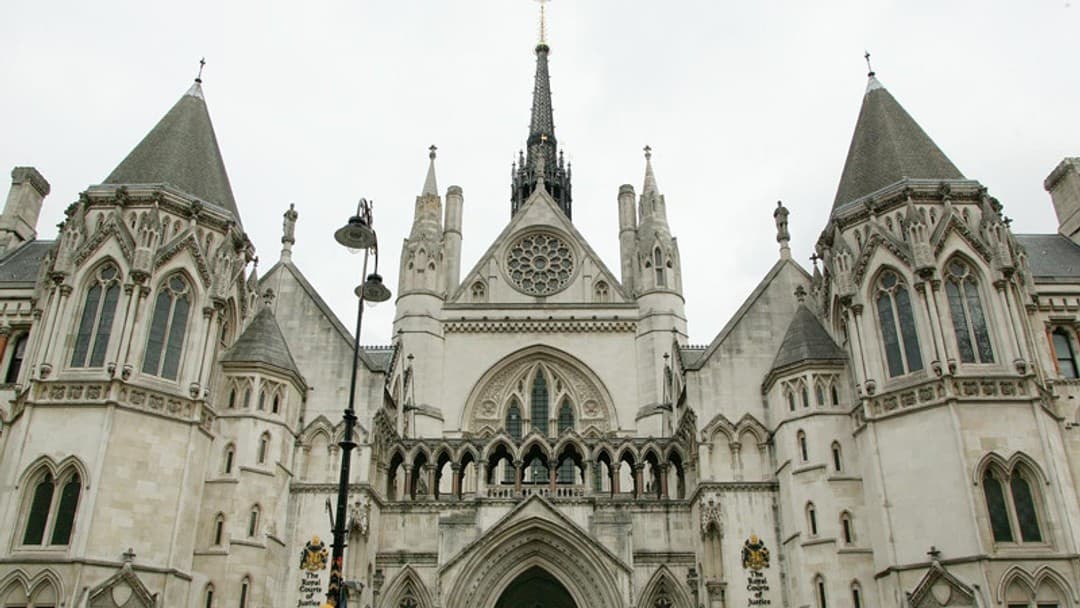
High Court quashes Parole Board's refusal to release lifer, citing material factual errors.
His Honour Judge Charman, sitting as a judge of the High Court in the Administrative Court at Birmingham, quashed both the Parole Board's decision of 28 July 2025 and its subsequent reconsideration of 17 September 2025 refusing to direct the release of Ryan Halliday, a prisoner serving a discretionary life sentence.
Halliday had been sentenced in November 2017 to a discretionary life sentence with a minimum term of eight years and six months for three offences of possession of a firearm and ammunition with intent to endanger life. His tariff expired in March 2025. Following an oral hearing, the Parole Board declined to direct his release or recommend open conditions. A reconsideration application was refused, and judicial review proceedings followed.
Mistake of fact
The court identified two clear mistakes of fact in the panel's reasoning. First, the panel proceeded on the basis that Halliday had committed serious offences whilst on licence — a finding that was simply wrong, as he had never offended whilst on licence. Second, the panel referenced an adjudication for obstructing a prison officer as evidence of concerning custodial behaviour; in fact, Halliday had appealed that adjudication and it had been overturned. The panel had also referenced intelligence from West Yorkshire Police concerning alleged drug distribution, despite having itself concluded at the outset that the intelligence was unsupported and should attract no weight.
Applying the four-stage test from E v Secretary of State for the Home Department [2004] QB 1044, the court found all four limbs satisfied. Critically, both errors featured expressly in paragraph 4.2 of the Decision — the very paragraph in which the panel set out the matters to which it attached "particular weight." This made it impossible to accept the reconsideration panel's finding that the factual error had not played a material part in the reasoning. The court drew the analogy with R (Kitto) v Parole Board [2003] EWHC 2774, in which a panel had unlawfully taken account of a risk that did not exist.
Irrationality
The irrationality challenge succeeded on two bases. The first flowed directly from the factual errors: placing significant reliance on matters that were either untrue or expressly discounted by the panel itself constituted a demonstrable flaw in reasoning within the principles articulated by Saini J in R (Wells) v Parole Board [2019] EWHC 2710. The court also adopted the refinement offered by HHJ Keyser KC in R (Williams) v Parole Board [2025] EWHC 3183, namely that the question is whether the conclusion was reasonably available on the evidence — not whether it was strictly entailed by it.
The second basis concerned the panel's treatment of the psychological evidence. At paragraph 2.12 of the Decision, the panel declined to accept the conclusions of the psychologist, Ms Cabera, partly on the ground that she had not had sight of the West Yorkshire Police intelligence. Given that the panel had already determined that intelligence to be unsupported and worthy of no weight, reliance on its absence as a reason to discount expert evidence was internally inconsistent and irrational.
The reconsideration decision was itself found to be unreasonable, both in outcome — because its finding that the factual error was immaterial was directly contradicted by the panel's own express reasoning — and in its own flawed reasoning on the materiality question.
The court granted the relief sought: both decisions were quashed and the matter remitted to the Parole Board for a fresh oral hearing on an expedited basis. No order for costs was made against the Parole Board, which had adopted a neutral stance throughout.
 Copyright & permissions

.jpg&w=3840&q=60)
-cropped-6au25meu.jpg&w=3840&q=60)





.JPEG&w=3840&q=60)