Purani Swami Dharmanandan Dasji v Bhudia & Ors: High Court approves charity scheme for Swaminarayan temple
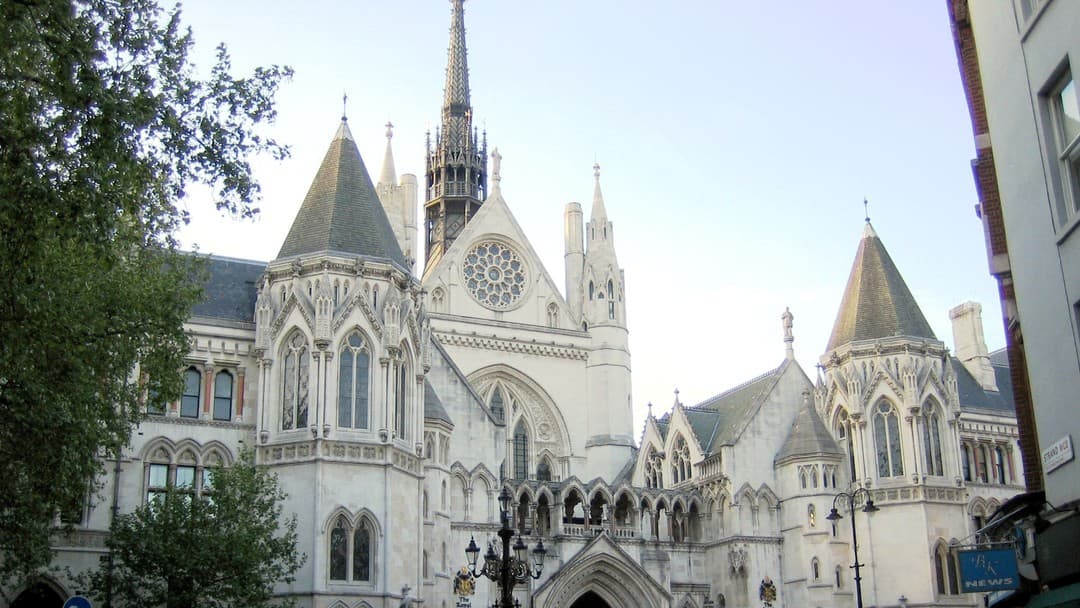
A new constitution for a £10 million Hindu charity, contested governance, and the limits of a founder's authority.
The High Court has handed down a significant judgement in the long-running governance dispute concerning Shree Swaminarayan Satsang, an English registered charity operating the Stanmore Temple in north London. Deputy Master Henderson approved a managerial scheme to replace the charity's existing constitution — a document that, as Richard Snowden QC observed as long ago as 2012, left the organisation in "desperate need of a professionally drafted and workable constitution."
The charity was registered in 2002 and holds total funds of approximately £10 million, including property valued at over £4.2 million. Its existing constitution was not professionally drafted and had generated sustained dispute over board composition, membership, and the extent of the Mahant Swami's (Head Priest's) powers. Proceedings were authorised by the Charity Commission on 27 June 2023 under s.115 Charities Act 2011, with HM Attorney General joined as fifteenth defendant — though neither the Attorney General nor her successors took any active part.
The court confirmed jurisdiction without difficulty. Registration under s.37(1) of the 2011 Act conclusively establishes charitable status, and the presence of an overseas ex officio director did not oust the court's inherent scheme-making jurisdiction.
The legal test
The court applied the test in Re J W Laing Trust [1980] Ch 143: a managerial scheme is justified where it is expedient in the interests of the charity, though the court should be slow to thwart the settlor's wishes. The judgement offers a careful analysis of how those wishes are to be identified where, as here, there are multiple founders whose intentions were not uniform. The primary and most authoritative source remains the governing document itself; extrinsic evidence of founders' intentions is of secondary weight only, and evidence of what a founder would have intended had a given situation arisen is inadmissible speculation.
The judgement also rejected the broader submission that the court's role is to "carry into effect the wishes and intentions of the founder." Once the threshold for a scheme is met, expediency and practicability may properly take precedence over faithfully reproducing the founders' administrative arrangements.
Key directions
Governance structure. The scheme preserves three tiers of decision-making: the Mahant Swami (or Deputy Mahant Swami acting in his absence), a board of eleven appointed directors, and the general membership. The Mahant Swami's ex officio chairmanship continues but is made optional — a departure from the existing constitution justified by practicability.
Appointment and removal of directors. Against the existing self-perpetuating board model, the court directed that the primary power to appoint directors should vest in the members in general meeting, with the board retaining only a power to fill casual vacancies pending the next AGM. The geographical remoteness of the Bhuj Temple from Stanmore, the charity's substantial assets, and the founders' own parallel structure at the Bhuj Temple — where members participate in trustee nominations — all supported this outcome. The board and the Mahant Swami retain concurrent removal powers subject to procedural safeguards; members may additionally requisition an independent investigation by a barrister of at least seven years' standing.
Constitutional amendments. Future amendments require a two-thirds majority of voting members present at a general meeting and the prior or subsequent written consent of the Mahant Swami or his deputy within 28 days. Attendance in person at the meeting is not required of the Mahant Swami.
Membership. The scheme introduces a formal registration process, a minimum voting age of 18, and a six-month continuous membership requirement before voting rights arise. No subscription is to be charged — the court found the administrative burden and potential discrimination against less affluent members outweighed any benefit.
Dissolution. The power to resolve on dissolution remains with the board, by a two-thirds majority, given the directors' personal exposure to liability as members of an unincorporated association. However, the destination of net assets on dissolution is to be determined by the membership in EGM, subject to the Mahant Swami's prior written approval.
Powers vested in the Mahant Swami. The court declined to vest relevant powers in the twenty-six-member board of SSMB India (the Indian trust operating the Bhuj Temple), preferring to retain them in the Mahant Swami personally — with the Deputy Mahant Swami exercisable in his absence. Vesting powers in a large foreign body whose own constitution could change without reference to the English charity was considered contrary to the charity's interests.
The judgement provides a detailed and unusually candid account of how the managerial scheme jurisdiction operates in practice, including the admissibility of extrinsic evidence as to founders' intentions, the limited utility of evidence about what a founder "would have wanted," and the proper weighting of expediency against deference to original constitutional arrangements. It will be of direct relevance to disputes involving multi-tier religious charity governance and the balance of power between overseas parent institutions and English registered charities.
The scheme is to be drafted by the claimant's solicitors and counsel in accordance with the court's directions, with a consequentials hearing to follow.
 Copyright & permissions

.jpg&w=3840&q=60)
-cropped-6au25meu.jpg&w=3840&q=60)




.JPEG&w=3840&q=60)