Pawel Wysokinski v OCS Security Limited: Court venue for data protection claims
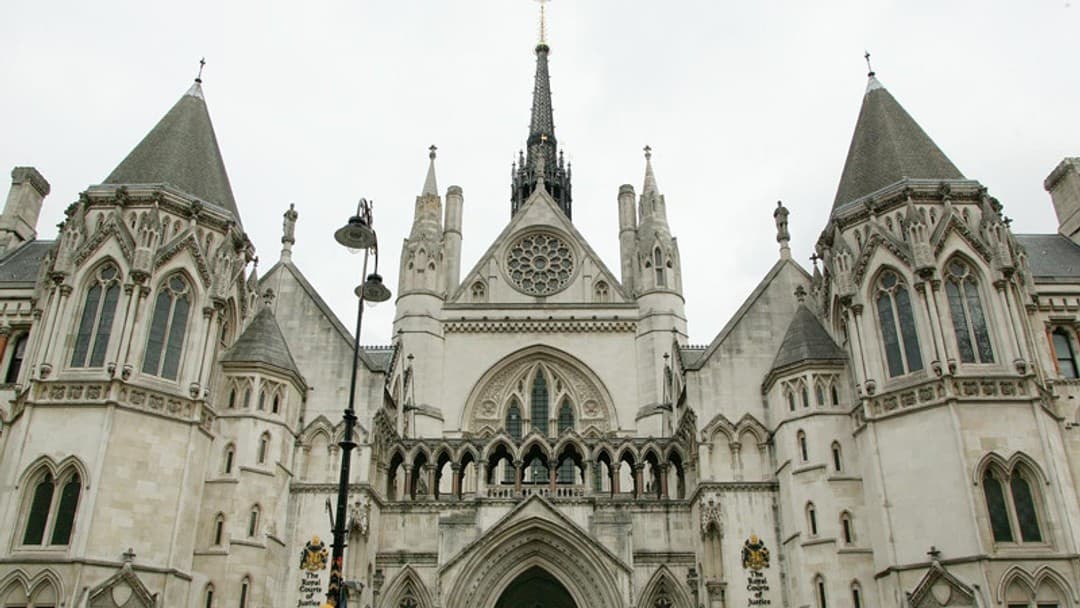
Appeal concerning the appropriate court venue for a data protection claim involving medical information disclosure.
The Court of Appeal has dismissed an appeal against the transfer of a data protection claim from the High Court to the County Court, whilst acknowledging procedural deficiencies in the manner in which the transfer was initially ordered.
The appellant brought a claim against OCS Security Limited arising from an incident at court premises where a security guard confiscated an item the appellant asserted was held for medical reasons. The guard subsequently disclosed details of the confiscated item to a court usher and a solicitor representing a third party, despite the appellant having shown a medical exemption certificate or prescription.
The claim was issued on 16 December 2024 as a High Court media and communications claim in the Cardiff District Registry. This contravened CPR r.53.4(1), which requires such claims to be issued in the King's Bench Division at the Royal Courts of Justice. Under CPR r.53.4(2), claims incorrectly issued in a District Registry must be transferred either to the County Court or to the Royal Courts of Justice.
The transfer decision
HHJ Jarman KC ordered transfer to the County Court on 31 December 2024 without a hearing and without inviting representations. The order contained minimal reasoning beyond recording the non-compliance with CPR Part 53.4(1). Significantly, the order failed to include the information required by CPR 3.3(5)(b) informing parties of their right to apply to set aside, vary or stay the order.
When the appellant sought reconsideration on 9 January 2025, his request was not treated as a formal application. His subsequent attempt to file an N244 application was rejected as it was filed in the wrong court, the transfer having already taken effect.
Procedural irregularities
Lady Justice Yip, giving the leading judgement, acknowledged clear procedural deficiencies. The failure to include the CPR 3.3(5)(b) information constituted an irregularity. The appellant had acted promptly and reasonably in seeking reasons within seven days of receiving the order and in making his application within seven days thereafter.
The Court noted that once the appellant requested reconsideration, the sensible course would have been to provide reasons for the decision and extend time for a formal application under CPR 3.3(5)(a). The use of an appeal to obtain a reasoned decision was not the best use of resources. However, these procedural deficits did not themselves determine the appeal's outcome.
The appropriate venue
The substantive issue was whether the County Court was the appropriate venue for the claim. The claim form indicated a value between £15,000 and £30,000, well within the County Court's ambit. The nature of the claim did not require determination by a High Court Judge nominated to the Media and Communications List.
The Court endorsed the principles articulated by Nicklin J in Cleary v Marston (Holdings) Ltd [2021] EWHC 3809 (QB), recognising that data protection claims with relatively low damages and no particular complexity ought properly to be commenced in the County Court. District and circuit judges are well able to deal with legal issues arising in such claims.
The respondent had admitted liability, subject to sight of the medical exemption certificate, acknowledging that disclosure of medication details breached statutory data protection rights. The remaining issues were straightforward factual matters, including assessment of distress and anxiety—exercises conducted daily in County Courts.
The appellant's assertion that the matter involved significant legal complexity was not supported by the material before the Court. The fact that disclosure occurred in the context of other legal proceedings did not affect the venue decision. Any complaint about fairness in those proceedings would need to be pursued through appropriate channels within those proceedings, whether in the County Court or High Court.
The costs question
The respondent sought costs exceeding £33,000. The appellant argued for no order as to costs or disallowance, citing procedural deficiencies and alleged cost inflation.
Lady Justice Yip recognised that whilst the general rule requires unsuccessful parties to pay successful parties' costs, the Court retains discretion under CPR 44.2. The procedural deficiencies below contributed to the appeal being pursued, and the respondent's costs appeared disproportionate to the appeal's nature.
Balancing all circumstances, the Court ordered the appellant to pay a contribution of £5,000 (inclusive of VAT) towards the respondent's costs, not to be enforced until conclusion of the claim save by set-off against any damages or costs awarded to the appellant.
Lord Justice Moylan and Lord Justice Bean agreed with Lady Justice Yip's judgement. The decision affirms that straightforward data protection claims, regardless of procedural irregularities in their initial handling, should be determined at County Court level where the value and complexity do not warrant High Court consideration. The judgement serves as a reminder of the importance of procedural fairness whilst confirming that such deficiencies do not inevitably alter substantively correct decisions on court venue.
 Copyright & permissions







.jpg&w=3840&q=60)

-cropped-6au25meu.jpg&w=3840&q=60)