NRD Property Limited v Ewan & Co LLP: solicitors held liable for breach of trust after unauthorised dissipation of client funds
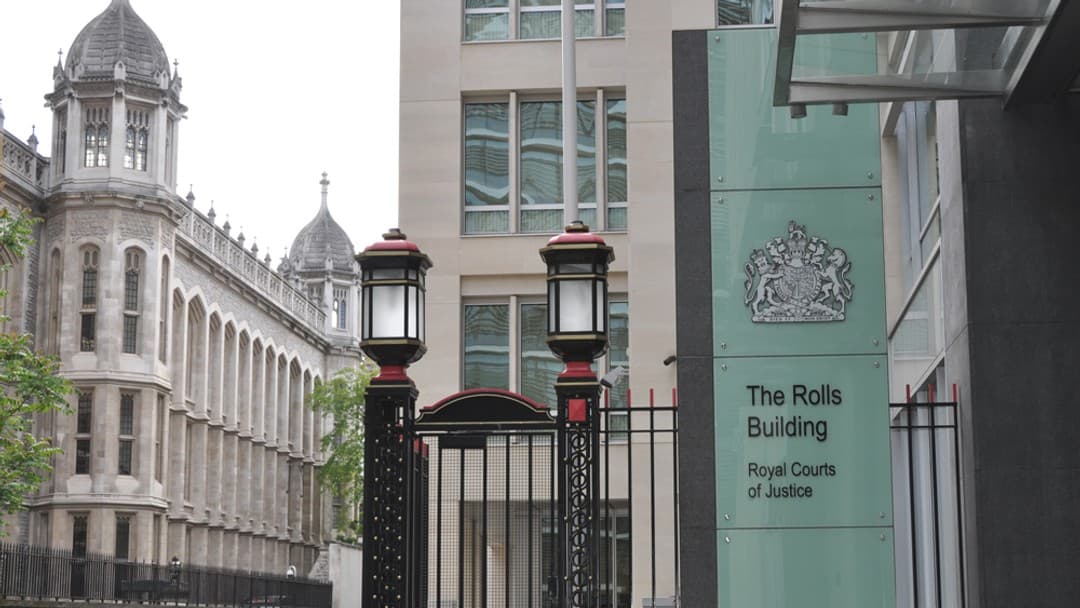
Firm that paid away over £2.5m in client monies without authority, forged a client's signature on security documents, and failed to discharge stamp duty has been found liable for breach of trust and breach of retainer.
In a judgement handed down on 17 March 2026 ([2026] EWHC 574 (Ch)), Master Kaye sitting as a Deputy High Court Judge found comprehensively in favour of the claimant, NRD Property Limited, a special purpose vehicle incorporated to acquire and develop a commercial property in Chatham known as the Bed Shop. The defendant, Ewan & Co LLP, did not appear at trial and was not represented, having failed in an eleventh-hour application to adjourn.
The facts disclose a sustained pattern of unauthorised conduct by the firm's employees. When bridging finance of £1.2m was advanced by Katrin Properties Limited in September 2018 for the sole purpose of completing the acquisition, the firm — acting for Katrin rather than NRD — unilaterally transferred £1m directly to the seller's solicitors and then paid the remaining balance to third parties, Investpek Limited and IDSE Limited, without any instruction from NRD or its director, Paul Smith. The court accepted expert handwriting evidence and corroborating documentary proof that the firm's payments to those third parties were entirely unauthorised, and that the defence's account of an implied authority derived from a course of dealings was wholly unsupported by any document or witness evidence.
The firm also undertook, by email on 28 September 2018, to submit the SDLT return and pay the associated duty of £42,000 from funds retained for that purpose. It filed the return but never paid the duty, and gave no explanation. The court held that the exchange of emails constituted a binding undertaking — noting that an undertaking need not contain the word "undertaking" and may be assembled from a series of communications — though the claim could not be enforced against the LLP under the court's supervisory jurisdiction by reason of Harcus Sinclair LLP v Your Lawyers Ltd [2021] UKSC 32. The firm nonetheless remained liable to account for the sum held on specific purpose trust.
Perhaps the most serious findings relate to the period following completion. When the firm failed to register Katrin's charge within the statutory 21-day period, it appears to have responded not by seeking an extension of time but by altering the dates on the transfer form, the discharge form, and a first legal charge — the last of which bore a forged signature of Paul Smith purportedly witnessed by the firm's senior partner, who himself admitted he had never met the client. A single joint handwriting expert instructed under CPR 35 concluded there was strong support for the proposition that the signatures on multiple documents, including the 14 November charge and the February 2019 security documents, were made by persons other than Smith.
TCF bridging finance of £1.332m, advanced in January 2019 on unconditional undertakings by the firm to redeem the Katrin charge, was similarly dissipated — £285,378 to Buckles Solicitors in connection with a property having nothing to do with NRD, and £1m again to Investpek. The charge was never redeemed. Instead, a further facility letter and second charge, bearing forged signatures, were created and eventually registered at the Land Registry in January 2020, effectively blocking NRD from obtaining development finance.
The court found the firm liable for breach of trust in respect of both the £1.2m and the £1.332m, and for breach of retainer in respect of the TCF transaction. An account and inquiry will be ordered to ascertain the full measure of equitable compensation, which the court confirmed may extend to NRD's lost opportunity to develop and sell the Bed Shop profitably — a development that a formal offer from Kentish Homes at £7.2m in 2021 suggested was commercially viable. The receiver appointed by TCF in June 2022 sold the property at auction, leaving a shortfall.
The firm's near-total failure of disclosure — attributed to the loss of staff laptops following closure in 2021, an explanation the court treated with considerable scepticism given the SRA's six-year retention requirement — weighed heavily against it. Permission to apply for an indemnity in respect of parallel proceedings brought by Katrin against NRD was reserved to a consequential hearing.
 Copyright & permissions
.jpg&w=3840&q=60)

-cropped-6au25meu.jpg&w=3840&q=60)




.JPEG&w=3840&q=60)