


Mazur v Charles Russell Speechlys: unauthorised staff can conduct litigation under proper supervision
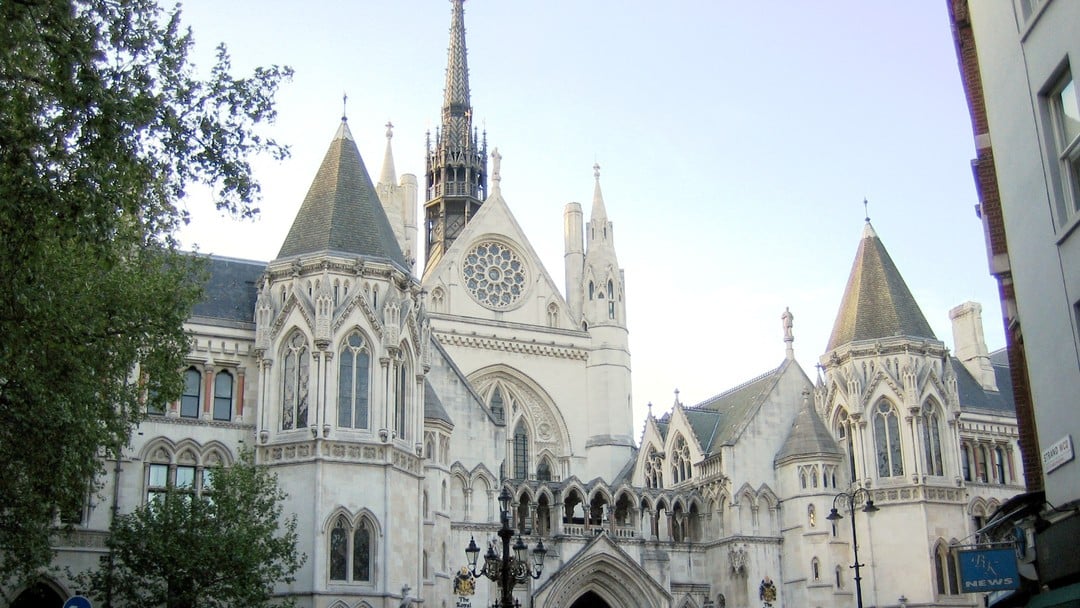
Court of Appeal clarifies when unqualified fee earners act lawfully in reserved legal activities.
The Court of Appeal has allowed an appeal brought by the Chartered Institute of Legal Executives (CILEX), holding that unauthorised persons may lawfully perform tasks constituting the conduct of litigation provided an authorised individual retains responsibility for that work and puts in place appropriate arrangements for supervision and delegation.
The case arose from a fees dispute in which Charles Russell Speechlys LLP pursued former clients Julia Mazur and Jerome Stuart through Goldsmith Bowers Solicitors. Proceedings were issued by Peter Middleton, the firm's Head of Commercial Litigation, who held no practising certificate. At first instance, Mr Justice Sheldon held that unauthorised persons who performed acts constituting the conduct of litigation under an authorised solicitor's supervision were themselves carrying on a reserved legal activity and, absent a defence under section 14(2) of the Legal Services Act 2007, committing a criminal offence.
The Chancellor of the High Court, Sir Colin Birss, writing for a court that also included the Master of the Rolls and Lady Justice Andrews, disagreed. The judgement distinguishes between the two elements embedded in the phrase "carry on the conduct of litigation". The words "conduct of litigation" describe the tasks themselves — issuing proceedings, commencing, prosecuting and defending them, and performing ancillary functions. The words "carry on", by contrast, refer to direction, control and responsibility for those tasks. On that construction, it is the authorised individual who carries on the conduct of litigation; the unauthorised person who performs the underlying tasks on their behalf does not.
This reading draws substantial support from the pre-2007 history of the profession. The judgement traces an unbroken practice, confirmed in cases including Waterlow (1883) and Hollins v Russell [2003], of solicitors delegating litigation work to managing clerks and unqualified staff. Parliament, when enacting the 2007 Act, is taken to have legislated against that settled background. There is nothing in the Act, or in its preparatory materials, indicating any intention to abolish or curtail that practice.
The Court of Appeal also revisited Ndole Assets v Designer M&E Services [2018] and Baxter v Doble [2023], both of which had been read by some as expanding the range of tasks within the conduct of litigation. The judgement clarifies that each concerned the distinct situation of an unauthorised person acting for a litigant in person who has no power to delegate the conduct of litigation at all. Neither case was authority for the proposition that an authorised individual's supervised, unauthorised staff member is themselves carrying on a reserved legal activity.
The degree of supervision required will depend on circumstances. In complex or high-risk matters, prior approval of individual steps may be necessary. For routine work — standard debt recovery claims are given as an example — regular oversight, periodic sampling and general instructions may suffice. The judgement is explicit that the "universal prior approval" requirement contended for by the Law Society and initially adopted by the Solicitors Regulation Authority is not mandated by the 2007 Act.
Three issues were formally resolved. First, the judge below was wrong to distinguish between an unauthorised person "supporting" an authorised solicitor and one "conducting litigation under supervision" — both are lawful where appropriate arrangements are in place. Second, whilst a comprehensive list of tasks within and outside the conduct of litigation remains elusive, the judgement confirms that pre-litigation work, legal advice, correspondence, evidence gathering, and instructing counsel and experts do not constitute the conduct of litigation. Third, the delegation model operated by law centres — in which a small number of authorised individuals supervise a larger body of unauthorised caseworkers — is governed by the same principles and is not contrary to the 2007 Act.
The practical effect is significant. Law firms, law centres and other regulated bodies whose operational models depend on non-solicitor fee earners handling litigation tasks under supervision may continue that practice, subject to regulators specifying the appropriate standards of delegation and oversight.
 Copyright & permissions