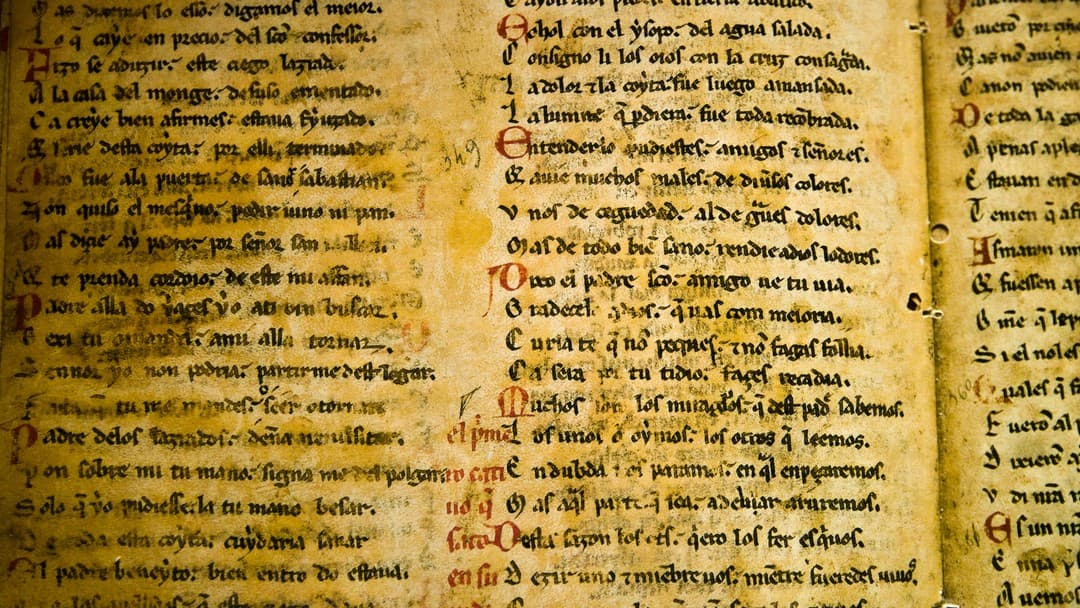
The rights and liberties set out in the Magna Carta have been a model in the development of the legal and parliamentary structures of modern states with connections with the Commonwealth.Papua New Guinea is one of those States. The ongoing influence of the Magna Carta is best understood by reference to the principles it articulates, rather than as law to be applied.
In England the Magna Carta of 1297 remains in force as a statute to the extent of three clauses, but most importantly clause 29, which guarantees the right to due process.
In Papua New Guinea, the Supreme Court recognises the force of Magna Carta as an historic document shaping the course of human rights in the common law world. In the Constitutional reference case Special Reference By Fly River Provincial Executive Council; Re Organic Law on Integrity of Political Parties and Candidates the court said: “Throughout English history, all power, legislative and executive was descended from the Crown. Initially the monarchs had absolute power, but this was progressively reduced over time by documents such as the Magna Carta (Great Charter) and the Bill of Rights which was signed by King John in 1215, and by King William (of Orange) and Queen Mary in 1689 respectively.”
Due Process and Protection of the Law
In Special Reference pursuant to section 19 of the constitution; section 365 of the Income Tax Act, Chief Justice Amet considered the meaning of “the right to protection of the law” under section 37(1) of the constitution. In doing so, he traced the concept to the historical development of “due process of law”.
That history was articulated by Justice Black in In the Matter of the Application of Paul L. Gault and Marjorie Gault, Father and Mother of Gerald Francis Gault, a Minor (387 U.S. 1, 1967), where he observed: “The phrase ‘due process of law’ has, through the years, evolved as the successor in purpose and meaning to the words ‘law of the land’ in Magna Carta, which more plainly intended to call for a trial according to the existing law of the land in effect at the time an alleged offence had been committed. That provision in Magna Carta was designed to prevent defendants from being tried according to criminal laws or proclamations specifically promulgated to fit a particular case, or to attach new consequences to past conduct.”
Chief Justice Amet concluded that the interpretation adopted by McDermott AJ in State v Mana Turi (supra) correctly reflects the meaning of “protection of the law”. On that view, protection of the law denotes the state of being protected by law. In practical terms, where a person is treated outside the law, that person is entitled to invoke the law’s protections.
Constitutional Supremacy and the Underlying Law
The Constitution of Papua New Guinea is the supreme law of Papua New Guinea and entrenched into the law of this country. Organic Laws, in respect of which section 12 of the constitution provides, are part of the supreme law.
The Supreme Court has shown that it is not hesitant to rule as invalid laws or acts which are inconsistent with the Constitution. The Magna Carta is likewise a document articulating important legal principles in the then newly emergent country of England, where different peoples were brought together under a single rubric.
Similarly, the constitution is a document articulating important legal principles in the then newly emergent country of Papua New Guinea, where people speaking 800 different languages were brought together under the one rubric.
The constitution recognises that the principles and rules forming the common law of England immediately before the Independence Day of 1975 should be applied and enforced as part of the underlying law of Papua New Guinea.
A continuation of the fundamental English human rights law, section 9(f) of the constitution identifies the existence and operation of the underlying law, being common law and customary law principles, although those principles do not operate to the extent that they are inconsistent with the constitution or a statute or are repugnant to the general principles of humanity (Schedule 2.1.1(2)).
The underlying law in Papua New Guinea incorporates the Magna Carta of 1215 and later versions thereof declared or reflected common law principles inherited from England. It is interwoven with the customary law. It is important to emphasise the point that the constitution ranks customary law equally with common law principles in constituting the underlying law of the land.
Any application of principles in the Magna Carta in Papua New Guinea would naturally be subject to the Constitution and any Act of the Papua New Guinea Parliament: “As the courts have repeatedly pointed out from an early date, Magna Carta, as a British statute is still a statute and under the doctrine of parliamentary sovereignty the local legislatures are perfectly competent to either displace or override it with local legislation.”
Criminal Justice and Prosecutorial Discretion
In Papua New Guinea, section 37 of the Constitution of Papua New Guinea, entitled “Protection of the Law” restates the principle that rule of law is paramount. Section 37 (1) specifically states: “Every person has the right to the full protection of the law, and the succeeding provisions of this section are intended to ensure that that right is fully available, especially to persons in custody or charged with offences.”
The influence of clause 39 of the Magna Carta, which stands against capricious prosecution by the state, can be seen in section 37(2) of the Constitution, which provides that: “Except, subject to any Act of the Parliament to the contrary, in the case of the offence commonly known as contempt of court, nobody may be convicted of an offence that is not defined by, and the penalty for which is not prescribed by, a written law.”
In respect of criminal offences, section 37(2) prescribes the conditions under which a person may be charged – that is by contravention of a written law. The Supreme Court has interpreted this section strictly. In Mune v Agiru, Kaiulo and Electoral Commission (Unreported, Supreme Court of Papua New Guinea) Supreme Court Judgment No. SC 590 (3 December 2003), it was observed that statutory provisions which simply imposed a duty on a public official without providing for a criminal penalty for failing to discharge that duty were not criminal “offences” punishable by a criminal sanction such as a fine or imprisonment.
The discretion of the public prosecutor was considered by Davani J in Eremas Wartoto v The State (2015) SC1411 (Supreme Court of Papua New Guinea, delivered 27 January 2015). His Honour observed that, under sections 176 and 177 of the Constitution, the prosecutorial power of the state is vested in the public prosecutor. He further stated: “Whatever decision he makes must be based on a proper basis, grounds or reasons and must not be made lightly. Persons charged with offences have the right to defend themselves once formal charge or charges have been laid.”
There has been a growth of home-grown Papua New Guinean jurisprudence by increased citation by Papua New Guinea courts of precedents developed in Papua New Guinea rather than citation of judgments from abroad. But there is an interesting trend of citation of Papua New Guinean cases by other superior courts in the region. In developing a fundamental law, the Magna Carta is arguably a good place to start.




 Copyright & permissions