Legal websites need greater accessibility
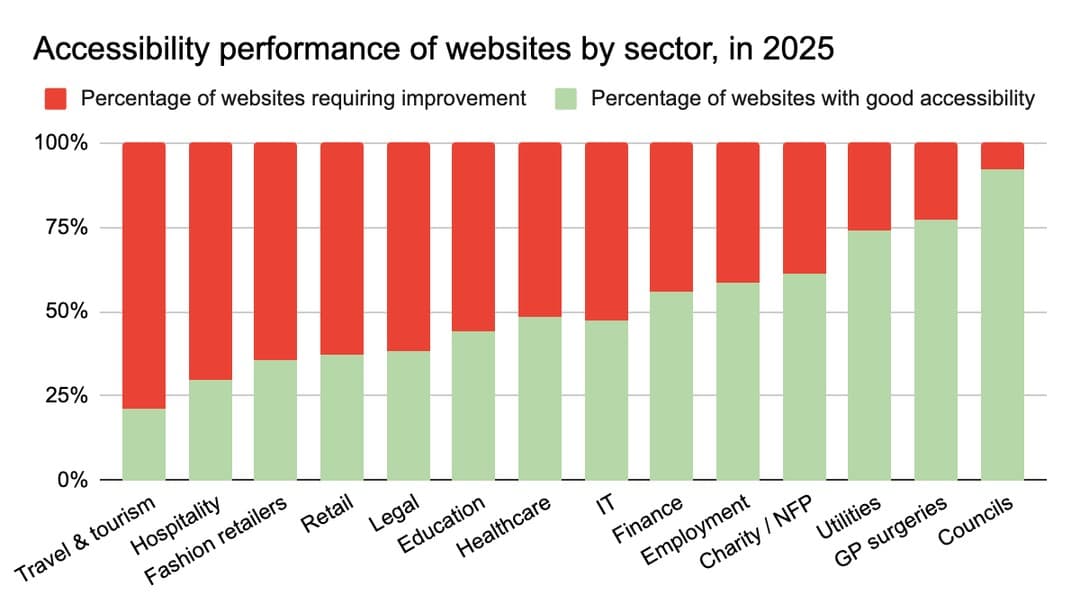
Research indicates that many legal websites in the UK require significant improvements to support disabled users
Legal websites in the UK are falling short when it comes to accessibility for disabled users, ranking among the least accessible according to the recent State of Accessibility Report by Warbox. The report examined over 1,200 websites across various sectors, uncovering that nearly half of UK websites, or 48%, are slated for accessibility improvements by 2026 to avoid excluding users with disabilities. Notably, the legal sector finds itself with 61% of its websites needing enhancements to be more user-friendly for disabled individuals, placing it significantly above the UK average.
Travel and tourism websites were identified as having the worst accessibility overall; more than three-quarters, or 79%, of their sites need improvements. In contrast, local councils are leading the way in accessibility, with only 8% of websites requiring changes, likely due to mandatory adherence to the Web Content Accessibility Guidelines (WCAG). Features such as small font sizes and inadequate colour contrast often hinder users from making purchases or accessing essential services online.
Tania Gerard, an accessible marketing consultant and founder of Tania Gerard Digital, emphasised the detrimental effects of poor website accessibility on user experience. She noted, “I've abandoned the checkout many times if I’ve found it difficult to make a purchase. But when accessibility is poor, customers don’t just leave a website; they form a lasting impression of that brand. It tells them the brand hasn’t considered their needs, which erodes crucial trust. Accessible design isn’t just about the compliance side, it’s about showing people they matter.” This sentiment is echoed by the 80% of disabled UK adults who report feelings of exclusion due to inadequate website accessibility, highlighting the missed revenue opportunities for brands.
The study also revealed that 70% of hospitality websites require improvements, alongside 64% of fashion and 63% across the retail sector. Mark Fensom, director at Warbox, remarked on the ongoing issue, stating, “The Website Content Accessibility Guidelines were published over 25 years ago, yet many brands are still struggling to provide an inclusive online experience. As more businesses shift to e-commerce and the search landscape evolves, accessibility is even more important to reaching customers and creating memorable, positive experiences.”
Fensom added that creating accessible websites is not prohibitively costly and should be integrated into the development process from the outset. Simple adjustments, such as incorporating image and video descriptions, highlighting buttons for easier visibility, and ensuring forms are properly labelled, can significantly enhance usability. A web developer can manage the technical requirements, but ultimately it is up to brands to prioritise website accessibility for their consumers.
 Copyright & permissions