Kyte v McLaren: High Court strikes out £2.1m fire claim over deficient pleadings
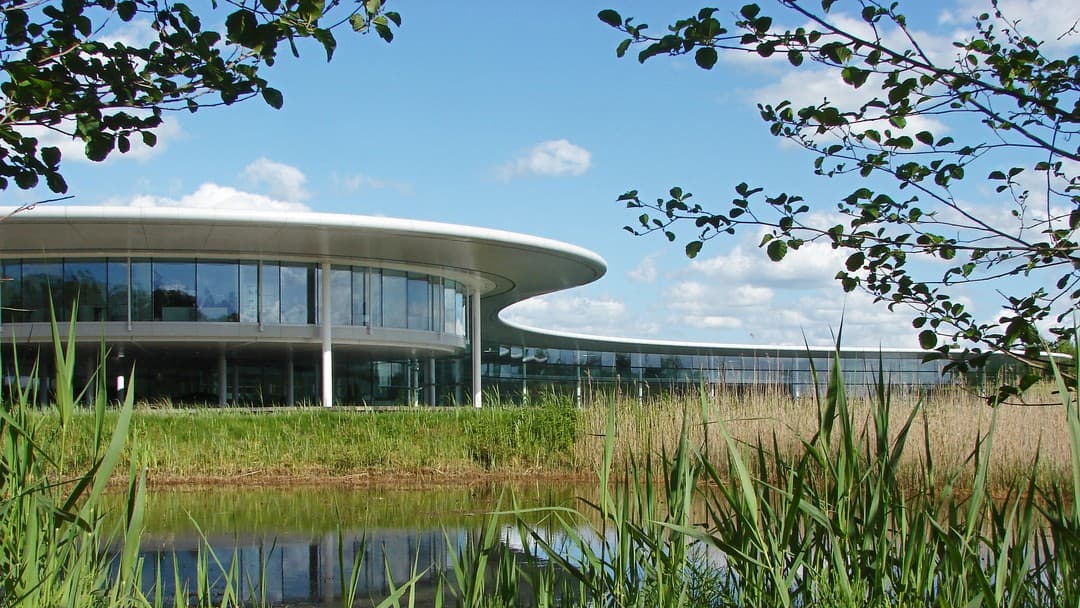
A McLaren owner's multimillion-pound claim has been dismissed after the court found his particulars of claim insufficiently particularised to constitute a cause of action.
In David Alan Kyte v McLaren Automotive Limited & Stratstone Sports Cars Limited [2026] EWHC 1126 (TCC), Mr Justice Eyre struck out proceedings brought by a McLaren owner whose £1.029m sports car was destroyed by fire in October 2017, ruling that the claim failed to meet the minimum pleading standards required under CPR r3.4(2).
The claimant had purchased the vehicle in May 2015. Following an accident shortly afterwards, McLaren Automotive (the first defendant) undertook a full rebuild on its Woking production line. Stratstone Sports Cars (the second defendant) subsequently performed various repair, service and maintenance works, the last of which concluded in April 2017. The vehicle caught fire while being driven on 20 October 2017 and was a total loss. The claimant argued it had been worth £2.1m at that point.
Proceedings were issued in April 2024, and the particulars of claim were served in February 2025 following a period of stay to allow further expert investigation. Both defendants applied to strike out the claim, contending that it failed to set out the essential facts necessary to constitute a cause of action and was insufficiently clear to enable them to know the case they had to meet.
Eyre J agreed. Examining each head of claim in turn, he found that the particulars consisted largely of recasting contractual obligations in negative form and inserting "failing" before elements of the duty of care, an approach expressly condemned by Coulson J in Pantelli Associates Ltd v Corporate City Developments No 2 Ltd [2010] EWHC 3189 (TCC) as "simply not good enough". The claimant had not identified which specific parts were said to be defective, which connections were insufficiently tightened, which fluid systems had been inadequately inspected, or which hoses had been wrongly configured.
The claimant advanced three arguments in support of the pleading's adequacy. First, that cases involving destruction of evidence by fire warranted a relaxed approach to particularisation. Eyre J rejected this, holding there is no special doctrine applicable to fire cases. Courts may take a robust approach to causation where negligence has been established and damage is of the kind expected from the relevant works, as in Drake v Harbour [2008] EWCA Civ 25, but this does not remove the obligation to identify and plead the relevant failing in the first instance.
Second, the claimant invoked an alleged asymmetry of information, pointing to McLaren's regulatory obligations and a product recall concerning a different model. Eyre J was unpersuaded. Multiple joint expert examinations had taken place with the first defendant's technicians present, substantially narrowing any informational imbalance. Any root cause analysis produced by McLaren internally would remain a post-hoc expert assessment subject to the same evidential constraints.
Third, the claimant relied on res ipsa loquitur. This also failed. The maxim requires that the occurrence would not ordinarily happen without negligence and that the thing was under the defendant's sole control at the material time. The fire occurred 22 months after McLaren had returned the vehicle and six and a half months after Stratstone's last involvement. Neither set of circumstances permitted an inference of negligence to be drawn from the fire alone.
On the question of amendment, Eyre J declined to afford the claimant an opportunity to replead. No draft amendment had been offered, no indication was given of what further particulars could be provided in the claimant's current state of knowledge, and the proceedings were by then eight and a half years removed from the fire itself.
The applications succeeded and the claim was struck out in its entirety.
 Copyright & permissions



.jpg&w=3840&q=60)