Later this year, Hong Kong will host the 94th Interpol General Assembly, bringing police chiefs from across the globe to a city now firmly under Beijing's control. It will be the first time the General Assembly has been held in the Hong Kong Special Administrative Region. Chinese officials have framed the event as a showcase for "One Country, Two Systems" — though the choice of venue may raise eyebrows.
China is widely viewed as an abuser of Interpol's Red Notice system, with a reputation for sophisticated misuse to target political dissidents, Uyghur activists and businesspeople who have fallen foul of the state.
Red Notices have become a potent tool of transnational repression — the practice by which authoritarian states reach beyond their borders to silence, harass, or pursue those who have fled abroad. In my own practice, I have acted for clients targeted by Red Notices from Russia, China, Iran and elsewhere — high-profile British journalists, international businesspeople, human rights activists and dissidents, and individuals involved in cryptocurrency.
But one needn't be a prominent dissident or billionaire to find oneself in the crosshairs. Red Notices are often susceptible to shifting local political and commercial dynamics: in many jurisdictions, conducting business requires a local partner, and when those relationships sour, the system can become a weapon — deployed to settle scores, seize assets, or effect a form of corporate raiding against foreign investors.
What a Red Notice is, and what it is not
Red Notices are frequently misunderstood. Interpol is not a global police force with officers patrolling international borders; it is an information-sharing hub connecting law enforcement agencies across 196 member countries.
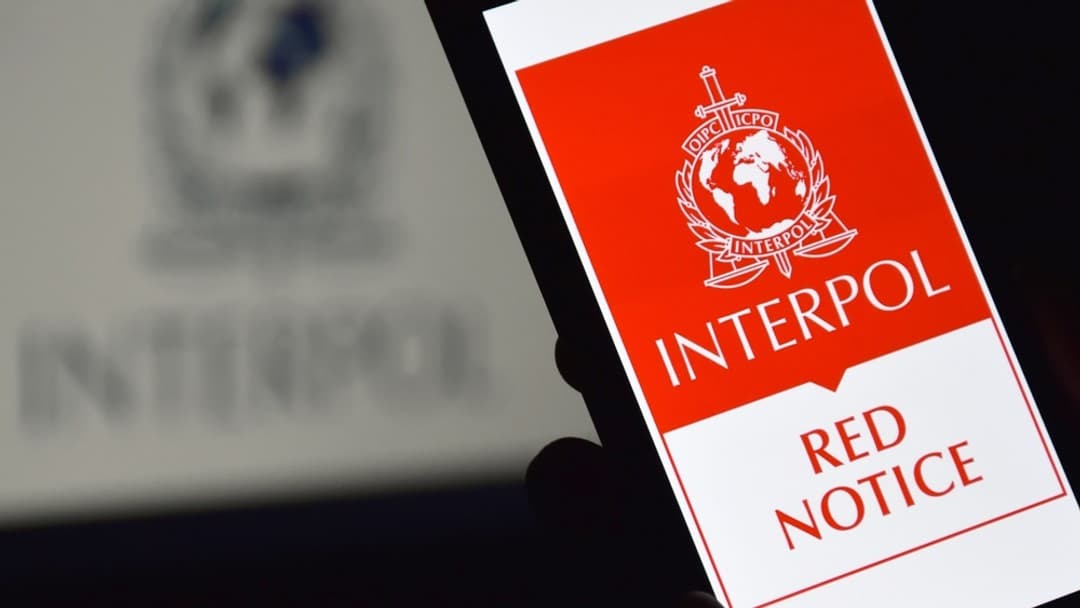
A Red Notice is simply a request circulated through Interpol's database, alerting member states that a particular individual is wanted for criminal prosecution or to serve a sentence. It contains identifying information — name, date of birth, nationality, photograph — alongside details of the alleged offences. Crucially, a Red Notice is not an international arrest warrant.
It carries no legal obligation. Yet in practice, its consequences can be severe: some countries treat a Red Notice as grounds for immediate detention, while others view it merely as an alert. Either way, issuance typically results in arrest or significant restrictions on international travel, and often triggers extradition proceedings. Red Notices can also lead to debanking, and disclosure of a notice — whether through Interpol's public database or media reporting — can cause significant reputational damage with attendant commercial consequences.
Abuse, accountability and the limits of internal remedies
The system serves a legitimate purpose. It provides a mechanism for preventing serious criminals from exploiting cross-border mobility to evade justice — as illustrated by the arrest late last year of Simon Leviev, the "Tinder Swindler," detained in Georgia on an Interpol Red Notice after years of defrauding victims across Europe.
But it does not follow that every Red Notice subject is genuinely criminal. There is extensive documentation of authoritarian regimes weaponising the system to pursue political opponents, journalists, and business rivals abroad. The Joint Committee on Human Rights, in its July 2025 report on transnational repression in the UK, identified China, Russia, and Turkey as the most prolific abusers, with evidence also implicating a host of other countries with questionable human rights records.
In November 2025, UN human rights experts condemned El Salvador's use of Red Notices against two human rights defenders living in exile in Spain, describing it as "an act of transnational repression." Red Notices, it has been said, are "the sniper rifle of autocrats" — long-distance, targeted, and highly effective.
What remedies are available to those who find themselves targeted? The primary mechanism for challenging a Red Notice is through Interpol's Commission for the Control of Files (CCF), an independent body tasked with ensuring data processed through Interpol's systems complies with its rules. Under Article 3 of Interpol's Constitution, the organisation is "strictly forbidden" from undertaking any intervention or activities of a political, military, religious, or racial character.
A request to the CCF can be made by any individual who believes a notice against them violates these rules — for example, because the underlying prosecution is politically motivated or the requesting state has a track record of abuse. If successful, the CCF can order the deletion of the notice from Interpol's databases. Yet the process is far from straightforward. Applications to the CCF can take months, sometimes years, to resolve. There is no oral hearing; decisions are made on the papers. And Interpol does not publish which countries' requests have been refused, making it difficult to identify patterns of abuse or hold serial offenders to account.
There are also questions about Interpol's institutional accountability. In November 2025, the General Assembly adopted a landmark General Agreement on the Privileges and Immunities of Interpol, granting the organisation broad immunity from legal process. The Agreement provides Interpol with wide-ranging immunity from the jurisdiction of domestic courts in respect of claims brought by third parties, whether arising from contract or otherwise. Critics argue such immunity is difficult to justify unless those affected by Interpol's actions have access to an effective alternative remedy. Whether the CCF, with its lengthy timescales and procedures, meets that standard is open to debate. For practitioners, the message is clear: engaging with Interpol's internal mechanisms is not optional — it may be the only route available.
Practical considerations
For those detained on the basis of a Red Notice, a focused challenge is critical — and it is important to engage with Interpol's systems. In cases involving politically motivated Red Notices, practitioners should gather evidence of the requesting state's human rights record, any history of Interpol abuse, and the particular circumstances of the client — including their political activities, business dealings, or profile as a dissident. This material will support an application to the CCF for deletion of the notice. Red Notice lawyers also increasingly encounter these issues in immigration cases.
Early intervention is key. Lawyers acting for clients who may be at risk of a Red Notice — whether because of a souring business relationship, political activities, or dealings in a high-risk jurisdiction — should consider a proactive approach. It is possible to make pre-emptive representations to Interpol before a notice is issued, or to seek confirmation from the CCF as to whether a notice already exists.
Where a notice is in place, swift action can make a material difference: the longer a Red Notice remains on the system, the greater the risk of detention, debanking, and reputational harm. Practitioners should also be alive to the existence of diffusions — a less formal alert mechanism circulated directly between national central bureaus, which bypasses Interpol's central vetting process and is therefore particularly susceptible to abuse. Diffusions do not appear on Interpol's public database and clients may be unaware of their existence until they are stopped at a border. Coordination is often essential: a client facing a Red Notice may need advice spanning criminal law, extradition, immigration, and civil reputation management. For those navigating this landscape, specialist Red Notice lawyers with experience of the CCF process and an understanding of the geopolitics at play are invaluable.
Interpol's Red Notice system is not going away — nor should it. When used properly, it is a vital tool in the fight against serious cross-border crime.
But the scope for abuse is real, and for those caught in the crosshairs the consequences can be devastating. Transnational repression takes many forms, and the misuse of Interpol's systems is among its most insidious: it cloaks political persecution in the language of law enforcement.
As the General Assembly convenes in Hong Kong later this year, the tension at the heart of the system will be on full display: an organisation committed, at least on paper, to political neutrality, hosted by a state with a well-documented record of bending its rules. For lawyers advising clients with international exposure, vigilance is essential. Not every Red Notice is what it claims to be.




 Copyright & permissions