Intelligent Land Investments v Ofgem: High Court refuses permission for judicial review of LDES scheme rejection
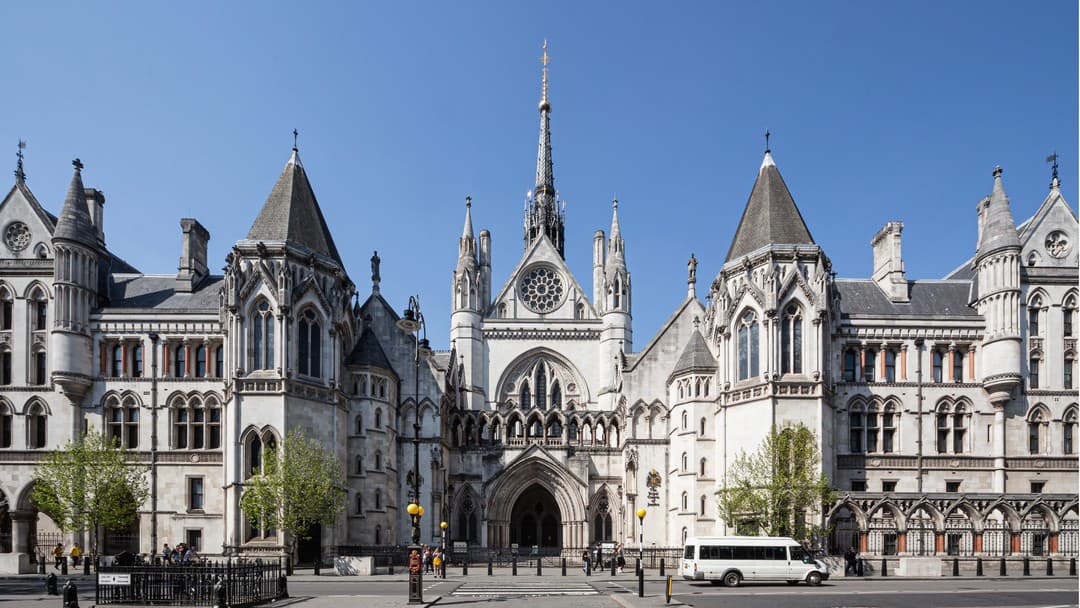
High Court upholds Ofgem's rejection of a pumped hydro storage application submitted without a required financial model.
In Intelligent Land Investments Group PLC v Gas and Electricity Markets Authority [2026] EWHC 336 (Admin), Mr Justice Linden refused permission for judicial review of Ofgem's decision to reject an application for financial support under the Government's Long Duration Energy Storage Cap and Floor Scheme. The judgement, handed down on 18 February 2026, provides a useful illustration of the limits of procedural fairness challenges and the Tameside duty of inquiry in the context of a time-sensitive regulatory award process.
The Claimant, an investor in renewable energy assets, applied to the Scheme in respect of a proposed pumped hydro storage project in Balliemeanoch, Scotland. The Scheme was designed to incentivise investment in long duration electricity storage assets as part of the Government's Clean Power 2030 strategy, with Ofgem tasked with delivering the process within a compressed timeframe.
The application was submitted at 18.50 on 9 June 2025 — the final day of the Stage 1 application window — and was materially deficient. Although the Claimant had finalised a financial model two days before the deadline, a link to that model was omitted through what was accepted to be a clerical error. In its place, the application contained a placeholder link, a revenue forecast model (which was not a financial model), and a screenshot showing only part of a financial model without the underlying formulae.
On 5 August 2025, Ofgem issued a minded-to decision indicating an intention to reject the application on the grounds that the Deliverability criterion — including the financing plans sub-criterion — had not been satisfied. The Claimant responded on 8 August, attaching the financial model and explaining the error. Ofgem rejected the application by letter of 22 September 2025, declining to admit the late material.
The grounds of challenge
The Claimant advanced two grounds. Ground 1 alleged procedural unfairness, contending that Ofgem had ignored its representations. Ground 2 was a process irrationality challenge under the Tameside principle, asserting that Ofgem could not rationally have made its decision without considering the financial model once it had been provided.
The judgement
Linden J rejected both grounds and refused permission. On Ground 1, the uncontested evidence was that Ofgem had carefully considered the Claimant's representations before deciding not to admit the late material. The right to be heard does not require a decision-maker to accept representations — only to consider them. That obligation had plainly been discharged.
On Ground 2, the court identified a fundamental mischaracterisation at the heart of the claim. The Claimant had framed the Decision as a rejection on the merits — that the application failed the eligibility criteria — and then argued that Ofgem irrationally failed to consider the financial model. In fact, the Decision was that the application had not satisfied the eligibility criteria within the deadline, and that Ofgem was not willing to consider material submitted late through the Claimant's own fault. Once this was appreciated, the Tameside challenge fell away: Ofgem had all the information it required to decide whether to exercise its discretion to admit the late material, and there were no further enquiries it needed to make.
Linden J also addressed the suggestion that an analogy with public procurement principles should inform the public law duty of procedural fairness. The court accepted that the procurement case law engages the concept of proportionality within a distinct statutory and policy context, and that no such read-across was available. The judge further observed that even within the procurement framework, consistent and rigorous enforcement of deadlines against applicants whose failures result from their own carelessness will generally be found proportionate, notwithstanding the severity of the consequences.
The judgement reinforces that where a public body makes clear in advance that deadlines are firm, applies them consistently to all applicants, and carefully considers any representations before declining to relax them, the courts are unlikely to intervene on grounds of procedural unfairness or Tameside irrationality. It also underscores the importance of accurately characterising the decision under challenge: a refusal to admit late material is analytically distinct from a refusal on the merits, and the two call for different grounds of challenge.
 Copyright & permissions

.jpg&w=3840&q=60)
-cropped-6au25meu.jpg&w=3840&q=60)




.JPEG&w=3840&q=60)