High Court grants summary judgement in Hale-Byrne diplomatic cables case
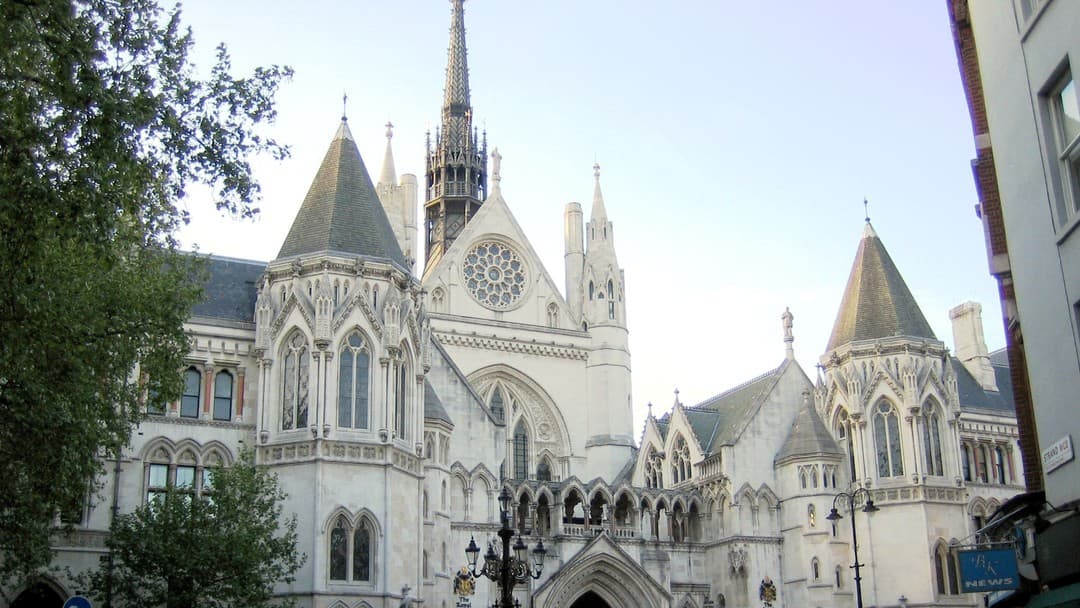
Summary judgement granted where claimant failed to establish defendants identified him to police as leak source.
The High Court has granted summary judgement to the Secretary of State for Business and Trade and the Secretary of State for Foreign, Commonwealth and Development Affairs in proceedings brought by Andrew Hale-Byrne, a former civil servant who alleged he was falsely identified to police as the source of leaked diplomatic cables.
The case arose from the July 2019 publication in the Mail on Sunday of diplomatic telegrams in which Sir Kim Darroch, then British Ambassador to the United States, described President Trump as "inept" and "incompetent". Sir Kim subsequently resigned. In October 2020, Hale-Byrne was arrested at his home by Metropolitan Police officers on suspicion of being the leak source.
Hale-Byrne's claim alleged misfeasance in public office, breaches of the GDPR and ECHR, and breach of privacy. He contended that civil servants in the defendant departments falsely identified him to police as the source of the leaked telegrams, knowing there was no evidence of his involvement. He further alleged this was done to divert attention from adverse reporting about Lord Darroch's conduct and as retaliation for complaints he had made about workplace bullying.
The evidential difficulties
Mr Justice Garnham identified fatal weaknesses in the claimant's case. The primary evidence relied upon was a Metropolitan Police briefing note from 12 October 2020 stating "UK security Services have now identified Andrew Hale-Byrne as the source of the leak within the UK government." Critically, this did not assert that staff from either defendant department provided this information to police.
The court noted that the Security Service has a statutory role under section 1(4) of the Security Service Act 1989 in supporting police forces in preventing and detecting serious crime. However, neither the Security Service nor the Secretary of State for the Home Department (who has ministerial responsibility for the Security Service) were parties to the proceedings. There was no pleaded case that the defendants used the Security Service as a conduit for information.
When the judge raised the possibility of amending the pleadings to add the appropriate defendant, counsel for the claimant did not pursue this course. The court observed that the summary judgement application had been issued in February 2024, providing ample time to ensure proceedings were brought against the correct defendant.
Timing undermines causation
The claimant's theory that his arrest was prompted by The Sun serving a "right of reply" letter on Lord Darroch on 12 October 2020 was undermined by the police briefing note itself, which was dated 11 October 2020—one day before that letter was served. The decision to arrest had therefore been made before the event the claimant claimed prompted it.
Procedural context
The proceedings involved closed material procedures under the Justice and Security Act 2013. Chamberlain J had declared these proceedings suitable for closed material applications, and Bourne J had subsequently granted the defendants permission to withhold sensitive material. The court considered both open and closed evidence in reaching its decision, concluding that the closed evidence reinforced the findings based on open material.
The claimant's application to join Lord Darroch as a third defendant was dismissed as academic in light of the summary judgement. The court noted that in any event, there was no evidence Lord Darroch played any part in the arrest decision, and he did not hold public office at the relevant time.
The judgement underscores the importance of identifying the correct defendant and establishing an evidential foundation for claims against public authorities, particularly where security services may have been involved in decision-making processes.
 Copyright & permissions