Hammond v Herrington Carmichael: when interim invoices become statute bills
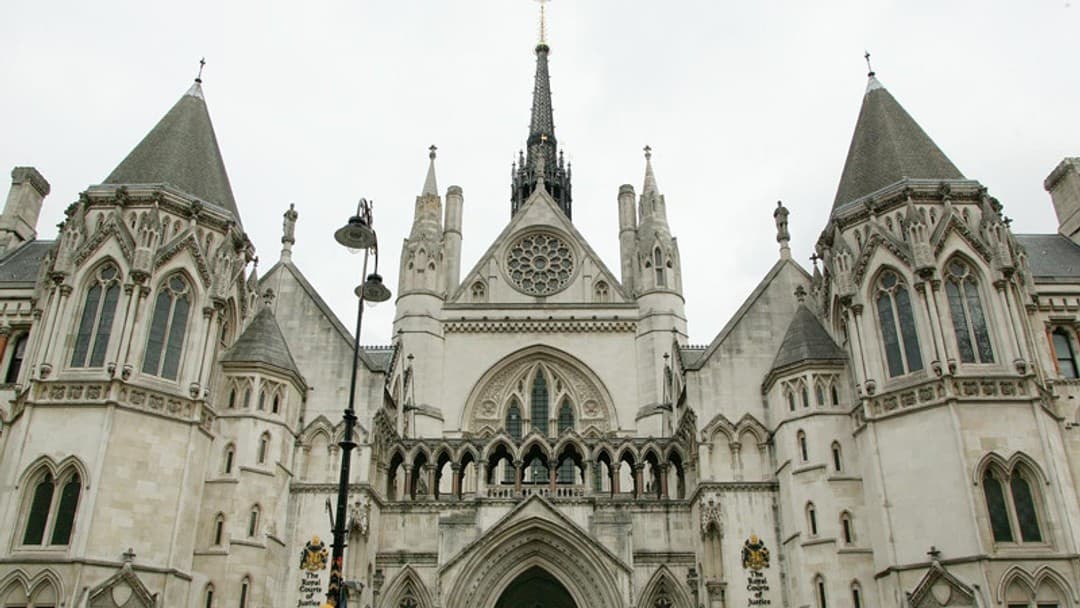
Costs Judge Whalan rules on whether 29 solicitor invoices constituted interim statute bills — with significant consequences for assessment rights.
In a judgement handed down on 24 March 2026, Costs Judge Whalan of the Senior Courts Costs Office determined that 29 invoices delivered by Herrington Carmichael LLP to their former client Carl Brendan Hammond were interim statute bills (ISBs), not a series of interim invoices forming part of a single "Chamberlain" bill. The decision substantially limits Hammond's ability to seek a detailed assessment under the Solicitors' Act 1974.
Hammond had instructed Herrington Carmichael from August 2023 to June 2025 in protracted family finance remedy proceedings. Over that period the firm delivered 29 invoices totalling approximately £174,183, the majority of which were paid. When Hammond applied under s.70 of the 1974 Act for a detailed assessment of all 29 invoices, the firm challenged his entitlement to assessment in respect of all but two.
The central question was whether the invoices were ISBs — each representing a final bill for the period it covered — or whether they formed part of a composite "Chamberlain" bill that only crystallised on delivery of the final invoice in August 2025. Had the latter analysis prevailed, the one-month time limit under s.70(1) would have run only from that final delivery, potentially opening all invoices to assessment as of right.
Costs Judge Whalan resolved the point firmly in the firm's favour. The Standard Terms of Engagement annexed to each of the four successive retainers stated that any reference to an "interim invoice" was to be treated as an ISB, and that ISBs would be delivered from time to time where a matter became protracted. The judge found this language unequivocal. Each invoice was signed, carried a payment due date, set out the client's right of assessment under the 1974 Act, and was accompanied by a detailed billing guide breaking down costs by date, time, fee earner and narrative. Those features satisfied all the recognised requirements of an ISB.
Following the Supreme Court's guidance in Oakwood Solicitors Limited v Menzies [2024] UKSC 34 on what constitutes "payment" for the purposes of s.70, the court then identified nine invoices delivered and paid more than 12 months before Hammond issued his Part 8 claim on 14 August 2025. Those invoices fell outside the court's jurisdiction entirely under s.70(4).
For three further invoices paid within 12 months but subject to the s.70(3) threshold, and for 15 remaining disputed invoices, Hammond needed to demonstrate "special circumstances" or persuade the court to exercise its discretion in his favour. He advanced four grounds: findings by HHJ Farquhar in the substantive proceedings that the parties' combined costs of approximately £366,000 were "frankly ludicrous" and constituted "litigation misconduct"; an alleged error in the handling of a pension Cash Equivalent Value that prolonged proceedings; the general escalation of costs; and the unusual funding arrangement under which his brother-in-law, Garry Moore, indemnified the bulk of the costs through an escrow account.
The judge declined to find special circumstancHammond v Herrington Carmichael LLP [2026] EWHC 701 (SCCO), Costs Judge Whalan, 24 March 2026.es on any ground. Regular, itemised billing meant Hammond was aware of his accruing liability throughout. The disproportionality of costs on an inter partes basis has limited relevance to a solicitor/client assessment conducted on the indemnity basis, where a presumption of reasonableness applies. No credible criticism of the firm's conduct was advanced, and Hammond's willingness to re-engage Herrington Carmichael in March 2025 — after a brief period off the record — undermined the suggestion of inadequate representation. The escrow funding arrangement, while unusual, had been agreed by all parties and did not of itself give rise to circumstances calling for judicial scrutiny.
The court consequently refused assessment of all invoices save the two already conceded: invoices 225141 and 226664, both delivered in the summer of 2025.
The case offers a clear illustration of the importance of retainer drafting in determining whether invoices will be characterised as ISBs. Where standard terms unambiguously confer that status and invoices are issued in a form that satisfies the recognised requirements, clients face significant procedural obstacles in pursuing retrospective assessment — particularly where invoices have been paid without contemporary objection.
 Copyright & permissions
.jpg&w=3840&q=60)

-cropped-6au25meu.jpg&w=3840&q=60)




.JPEG&w=3840&q=60)