GS Woodland Court v RGCM: trial adjourned in part following BSR rejection of fire safety remediation scheme
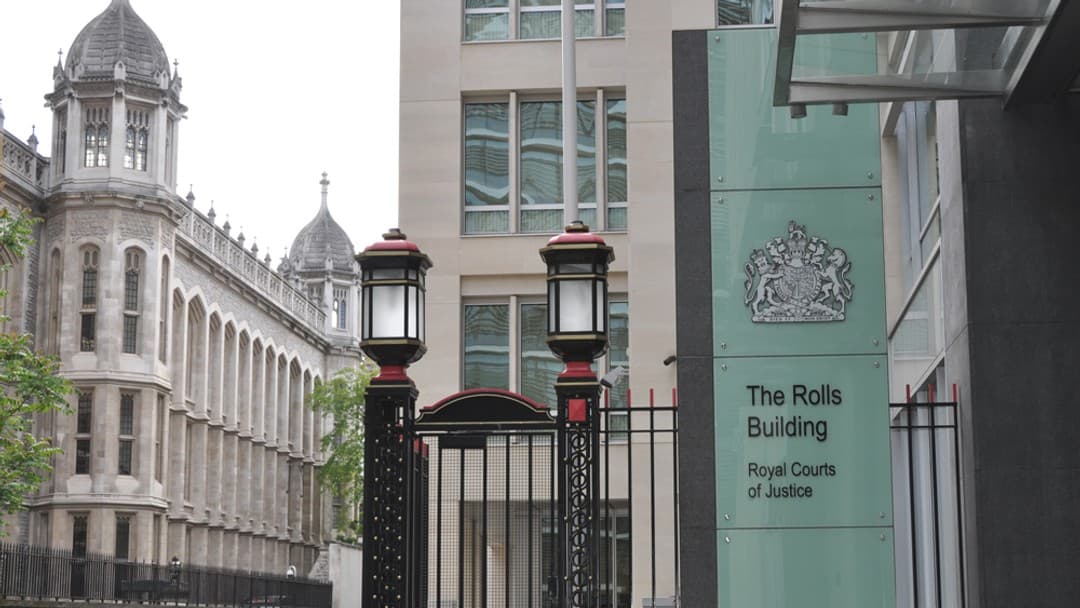
A Higher Risk Building remediation claim raises novel case management questions when the Building Safety Regulator rejects the claimant's proposed scheme.
The Technology and Construction Court has ordered a split trial in GS Woodland Court GP 1 Limited & Anor v RGCM Limited & Ors [2026] EWHC 351 (TCC), following the Building Safety Regulator's rejection of the claimant's proposed fire safety remediation scheme for a student accommodation development in Islington.
Woodland, the building's owner, brought proceedings against seven defendants — including the construction manager, architect, cladding contractor and modular construction specialists Unite Modular Solutions and Unite Integrated Solutions — alleging numerous fire safety defects caused by breaches of contractual, tortious and statutory duties. The total claim stands at £35 million, the majority attributable to a proposed mitigation remedial scheme.
The case turned on the interaction between live litigation and the regulatory framework introduced by the Building Safety Act 2022. As a Higher Risk Building, the Development requires Building Safety Regulator approval before any remediation works may lawfully commence. On 30 October 2025, the BSR rejected Woodland's submitted scheme, citing concerns from the London Fire Brigade about inadequate compartmentation, combustible materials in the external wall system and the proposed use of a water mist system in lieu of sprinklers.
Woodland applied to adjourn the trial, listed from 8 June 2026, to after 1 June 2027. Mr Justice Constable refused a full adjournment but acceded to a split trial, separating liability from quantum.
The judgement addressed an important question of principle: whether BSR rejection renders BSR approval status irrelevant to case management. The answer, the court made clear, is that it does not — but the weight to be given to it is entirely fact-sensitive. Had no decision been forthcoming before trial, proceedings could have continued on the orthodox basis of the court assessing what remediation was reasonably necessary. The rejection fundamentally altered that position. With the only pleaded mitigation scheme unlawfully incapable of implementation, and the alternative pleaded option running to £102 million on a near-complete rebuild basis, Woodland had no credible quantum case to advance. The court declined to treat this as a risk that Woodland had assumed by pursuing the litigation.
Constable J was careful to note that this finding of "no fault" was confined to the adjournment application. Whether the BSR rejection was an inevitable consequence of a flawed submission — potentially affecting Woodland's ability to recover professional fees and related costs — remained a live issue for trial.
On the question of a split trial, Unite had argued that adjourning the whole matter would put the parties on an equal footing and that delay itself was prejudicial. The court rejected both contentions. The only realistic alternative to a split trial was a listing no earlier than mid-2027, given the existence of related Highbury proceedings which could not fairly be adjourned. A November or December 2026 slot was equally impractical, leaving insufficient distance between the two sets of proceedings.
Whilst acknowledging the inefficiencies inherent in bifurcated litigation — overlapping witnesses, deferred contribution claims and additional costs — the court concluded that retaining the June 2026 date for liability issues represented the least imperfect solution available. With several defendants hotly contesting liability, there remained a real prospect that the quantum phase would involve a reduced cast of parties.
The June 2026 hearing will proceed on liability issues, with the parties directed to agree a granular list of issues and to engage on timing for a second phase.
 Copyright & permissions

.jpg&w=3840&q=60)
-cropped-6au25meu.jpg&w=3840&q=60)




.JPEG&w=3840&q=60)