Government unveils ambitious road safety strategy
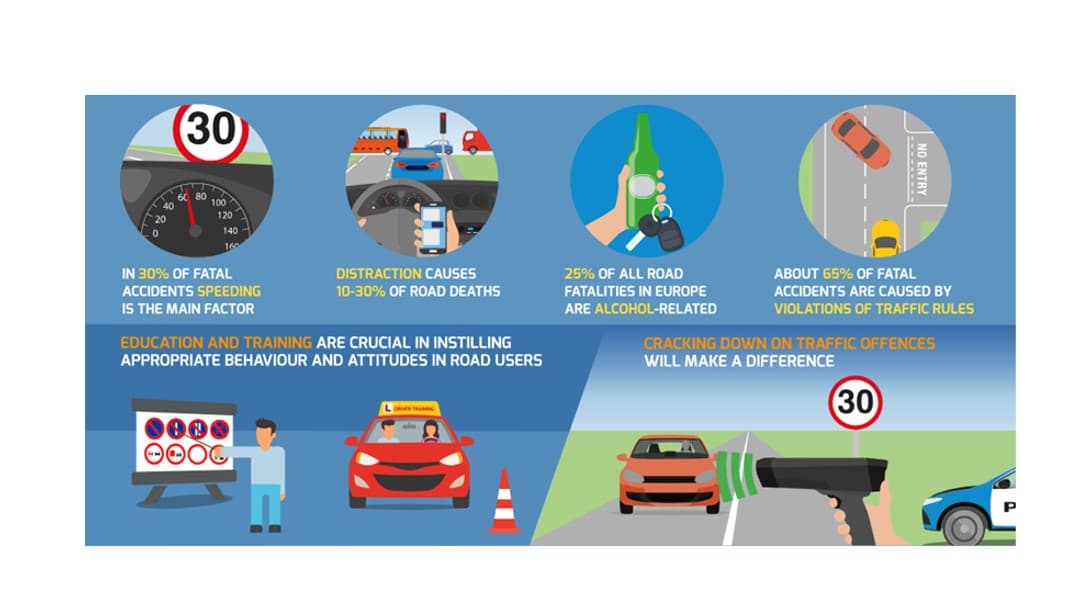
The new road safety strategy aims to reduce road deaths and serious injuries by 65% by 2035
In a significant move for road safety in the UK, the government has launched its first strategy in over a decade aimed at dramatically decreasing deaths and serious injuries on the nation’s roads. The ambitious plan, revealed on 7 January 2026, sets a target of reducing fatalities and severe injuries by 65% by the year 2035, with an even more challenging goal of 70% for children under 16. This initiative is especially crucial given that approximately four people die on Britain’s roads each day, with many more suffering serious injuries.
The strategy addresses multiple key factors contributing to road hazards, including speeding, drink and drug driving, and the lack of seat belt use. Among the many measures proposed, the government plans to consult on lowering the alcohol limit for drivers in England and Wales. This limit has remained unchanged since 1967, making it the highest in Europe. Recent statistics indicate that one in six road fatalities resulted from drink driving in 2023.
Transport Secretary Heidi Alexander stated that "every life lost on our roads is a tragedy that devastates families and communities," and emphasised the necessity of taking "decisive action" to encourage safer driving habits. In addition to addressing the alcohol limit, the strategy includes mandatory eye tests for drivers over 70 years of age, reflecting the growing concern about older drivers as the population ages.
The government will also tackle the increasing problem of illegal number plates and uninsured drivers. Lilian Greenwood, the Local Transport Minister, expressed the vision for the strategy, saying "to ensure that people can travel safely on our roads however they choose." This comprehensive approach aims not only to improve road safety but also to alleviate the burden on the NHS, ultimately fulfilling a commitment to foster safer communities.
Experts and advocates have long called for a collective approach to road safety and the new strategy reflects this imperative. Independent road safety campaigner Meera Naran MBE, who tragically lost her son Dev in a road accident, welcomed the announcement, expressing her appreciation for the government's commitment to implement "Dev’s Law," which focuses on legislative change.
Over the past decade, the UK has fallen behind many European countries in road safety, and this new strategy aims to reverse that trend by adopting the internationally recognised Safe System approach. This method acknowledges that while human error is unavoidable, the resulting deaths and injuries do not have to be. The introduction of a new Road Safety Investigation Branch is expected to analyse collision patterns and direct interventions effectively.
The strategy also highlights the role of technology in enhancing road safety, mandating 18 new vehicle safety technologies such as autonomous emergency braking. Edmund King OBE of The AA Charitable Trust praised the approach as a radical reframing of road safety, noting its timeliness and ambition that could save many lives.
Furthermore, the strategy places a spotlight on vulnerable road users, including motorcyclists and children from economically deprived backgrounds, both of whom are disproportionately affected by road traffic incidents. The National Work-Related Road Safety Charter pilot will establish standards to enhance safety for workers who drive or ride as part of their job.
The overall success of this initiative hinges on collaboration among government bodies, local authorities, businesses, and the public. Rod Dennis from the RAC noted the pressing need for such a strategy, stating that "the simple truth is that this strategy can’t come soon enough." With these measures in place, there is hope that the roads can become significantly safer for everyone, leading to fewer tragedies and more secure journeys for all road users.
 Copyright & permissions













.jpg&w=3840&q=60)