Gedeon Mahabir v Public Service Commission: retroactive promotions and procedural compliance in prison service
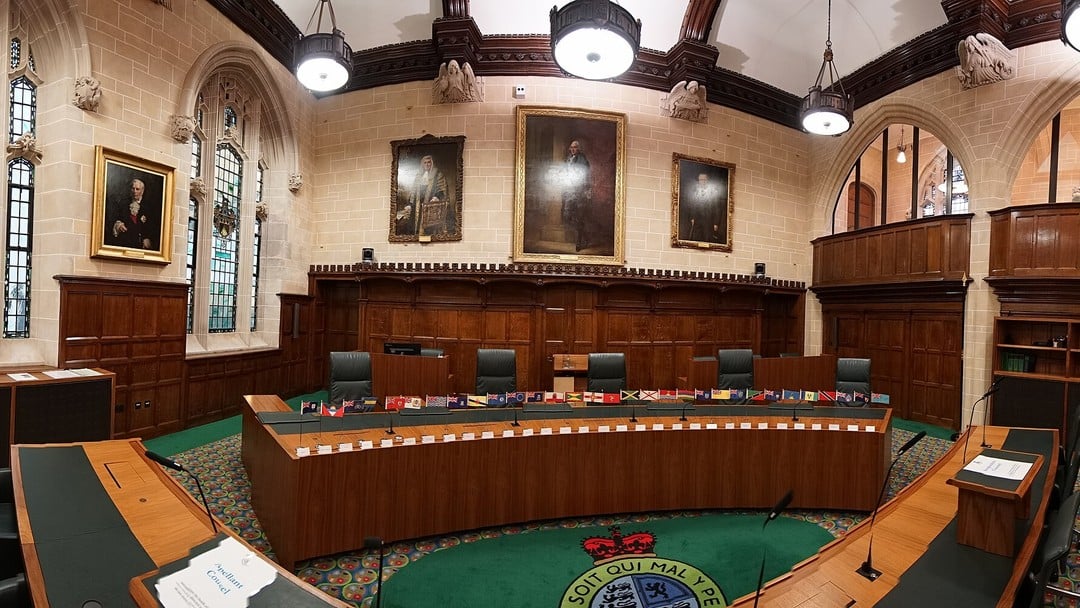
Privy Council considers retroactive promotion powers and compliance with statutory promotion procedures in Trinidad and Tobago.
The Privy Council has dismissed an appeal concerning the promotion of Prison Officers in Trinidad and Tobago, addressing the lawfulness of retroactive promotions and compliance with statutory procedural requirements.
The case arose from a large-scale promotion exercise in April 2013, when the Public Service Commission (PSC) promoted 180 Prison Officers I to Prison Officer II using a points-based assessment system. The appellant, who scored 97 points and was ranked 181st on the final order of merit list, challenged the decision on two grounds.
Retroactive promotion powers
The first issue concerned whether the PSC had power to promote five officers who had retired or resigned before the promotion decision was made on 9 April 2013, but who held office at the effective date of promotion in December 2011. The Board held that section 121(1) of the Constitution of Trinidad and Tobago conferred a broad power to make appointments on promotion with no express temporal restrictions. The critical question was whether officers held office at the effective date of promotion, not at the date the decision was made.
The Board noted that retroactive promotions are common practice in Trinidad and Tobago, particularly where delays in promotion processes would otherwise unfairly deprive officers of benefits they had earned during service. The ordinary language of section 121(1) plainly permitted retroactive effect, and strong policy considerations supported this interpretation. Officers should not be penalised by administrative delays or events beyond their control.
The appellant's reliance on section 42 of the Interpretation Act was rejected. This provision, which permits appointments to have retrospective effect from when an appointee first performed relevant functions, was raised for the first time on appeal without the evidential foundation necessary to apply it. In any event, the retroactive promotions did not disadvantage the appellant, as the officers concerned were no longer in the Prison Service and could not be standing between him and an actual vacancy.
Procedural compliance under regulation 168
The second ground concerned compliance with regulation 168 of the Public Service Commission Regulations. This provision ordinarily requires the Commissioner of Prisons to submit two lists to the PSC: those considered suitable for promotion and those bypassed despite greater seniority or experience. Bypassed officers must be notified and given opportunity to make representations.
In this case, no such lists were submitted by the Commissioner. Instead, the PSC adopted a points-based system following extensive consultation with the Commissioner and prison officers' representatives. All qualified officers were assessed against the regulation 172 criteria, with their scores determining their position on an order of merit list valid for two years.
Applying the approach in R v Soneji [2005] UKHL 49, the Board considered whether Parliament intended non-compliance with regulation 168 to invalidate the promotion decisions. The critical question was whether there had been substantial compliance such that the purpose of the regulation was substantially achieved.
The Board concluded that the substance of regulation 168's protections had been provided. The purpose of requiring a shortlist from the Commissioner was obviated by the PSC's decision to assess all qualified officers. The requirement for representations served to ensure officers' scores fairly reflected their qualifications. The appellant had two opportunities to make representations about his own score and took advantage of one, resulting in an increase from 92 to 97 points. He was satisfied his revised score was fair and accurately reflected his position.
Significantly, under the points-based system adopted, representations could only realistically affect an officer's own score, not challenge others' assessments or argue for preferential treatment despite lower scores. Officers knew that higher scores improved promotion prospects and had every incentive to maximise their own scores through representations, regardless of knowledge about others' positions. The order of merit list applied not only to the immediate promotion round but to subsequent vacancies over a two-year period.
The Board also noted regulation 170, which permits the PSC to depart from the Regulations when in the best interests of the service. This suggested compliance with regulation 168 was not an absolute legal precondition to exercising promotion powers under section 121(1) of the Constitution and regulation 172.
The Commissioner of Prisons had not abdicated his duties. The points-based system was introduced following consultation with the Commissioner, who actively engaged with and implemented the agreed procedure. The system provided an objective and transparent means of conducting a large promotion exercise for a relatively junior rank, minimising the subjectivity inherent in assessing the multiple criteria in regulation 172, which provides no guidance on their relative weight.
The appeal was dismissed, with the Board satisfied that the PSC lawfully exercised its constitutional promotion powers and that substantial compliance with the regulatory scheme had been achieved, preserving fairness to all candidates including the appellant.
 Copyright & permissions