


Fridman v Agrofirma Oniks: Court of Appeal confirms sanctions travel ban ends English court jurisdiction
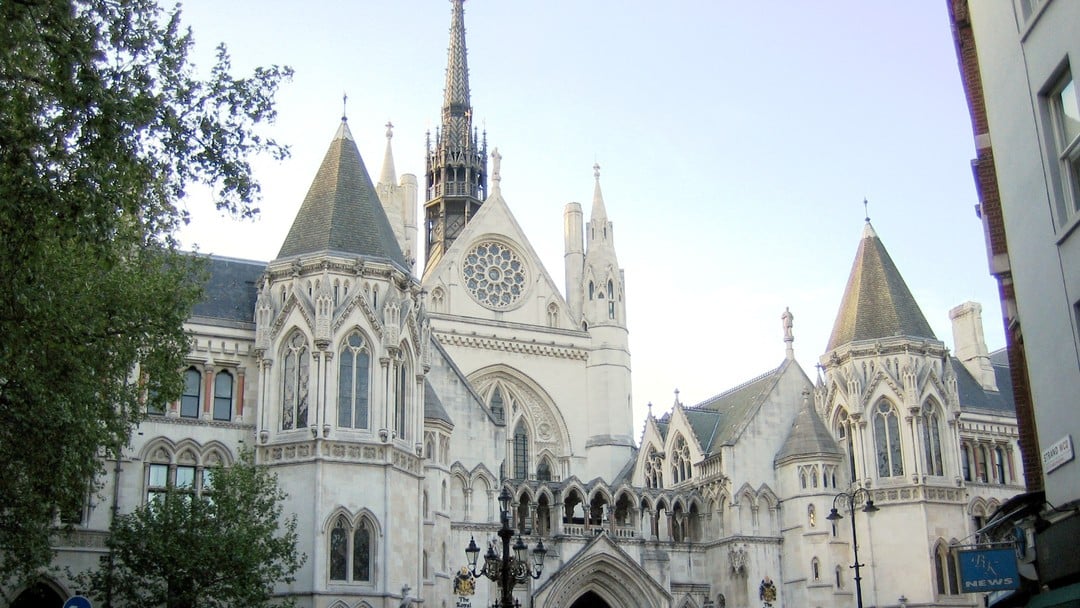
The Court of Appeal rules that an indefinite travel ban removes a defendant's amenability to service within the jurisdiction.
In Mikhail Fridman v Agrofirma Oniks LLC & Anor [2026] EWCA Civ 139, the Court of Appeal allowed Mr Fridman's appeal against a finding that he had been validly served with a claim form at Athlone House, his London property, notwithstanding that he had been subject to an indefinite travel ban under the Russia (Sanctions) (EU Exit) Regulations 2019 since March 2022 and had not been physically present in England and Wales since September 2023.
The leading judgement of Lord Justice Lewison, with which Lord Justice Phillips and Sir Launcelot Henderson agreed, resolves a long-running tension between two Court of Appeal authorities — Kamali v City & Country Properties Ltd [2007] 1 WLR 1219 and SSL International Plc v TTK LIG Ltd [2012] 1 WLR 1842 — and firmly restates the common law principle that personal jurisdiction at common law is grounded in presence within the territory.
The common law principle and its source
Lewison LJ traced the requirement of territorial presence not to procedural rules but to international law and the principle of territoriality, drawing on the Privy Council's decision in Sirdar Gurdyal Singh v Rajah of Faridkote [1894] AC 670 and the House of Lords' acceptance in Barclays Bank of Swaziland Ltd v Hahn [1989] 1 WLR 506 that presence was a "substantive jurisdictional requirement" — a characterisation the court in Kamali had conspicuously overlooked. Where a decision of this court cannot stand with an earlier decision of the House of Lords, the latter must prevail.
The reasoning in Kamali — that the CPR, by omitting the express "within the jurisdiction" language of the old RSC, had abolished any requirement of presence — was rejected. The court reiterated the principle from Masri v Consolidated Contractors International (UK) Ltd (No 4) [2010] 1 AC 90 that the presumption against extraterritoriality applies when interpreting the CPR; rules of court are to be read against the background of the common law, not in a legal vacuum.
Temporary absence and the travel ban
The court confirmed the qualification established in SSL International: temporary absence will not negate presence for jurisdictional purposes. A defendant who is ordinarily resident here but happens to be abroad at the moment of service may still be amenable to process. The critical question, however, is whether the absence is truly temporary in nature.
Mr Fridman's position was categorically different. Since his designation in March 2022 his leave to remain had been cancelled and re-entry was unlawful. He had physically left the jurisdiction in September 2023 and, given the open-ended nature of sanctions linked to the continuing conflict in Ukraine, there was no realistic prospect of return within any foreseeable period. His expressed intention to return could not be elevated to a true legal intention where its fulfilment lay entirely outside his control — applying the classic formulation from Cunliffe v Goodman [1950] 2 KB 237. The protection and subjection which together constitute the jurisdictional bargain, as Blackstone described it, were severed. The state had, in effect, enforced his removal; it could not simultaneously claim jurisdiction over him on the basis of a presence it had itself made impossible.
Practical consequences
The judgement leaves the respondents without an effective route to service within the jurisdiction. However, Lewison LJ indicated that permission to serve out of the jurisdiction under CPR r 6.36 remains available, and that if such permission were granted, the court could make an order for substituted service at Athlone House under r 6.15. Claimants facing similar circumstances — sanctioned defendants with formerly established English residences — should therefore proceed by way of an application to serve out, identifying with sufficient particularity the territory or territories in which the defendant is likely to be found, even where certainty is impossible.
The judgement provides clarity on the outer limits of the "temporary absence" doctrine and confirms that an indefinite, state-imposed travel ban constitutes a definitive break in the pattern of residence, whatever the defendant's subjective wishes may be.
 Copyright & permissions