EB v Director of Legal Aid Casework: psilocybin, anorexia and the limits of exceptional case funding
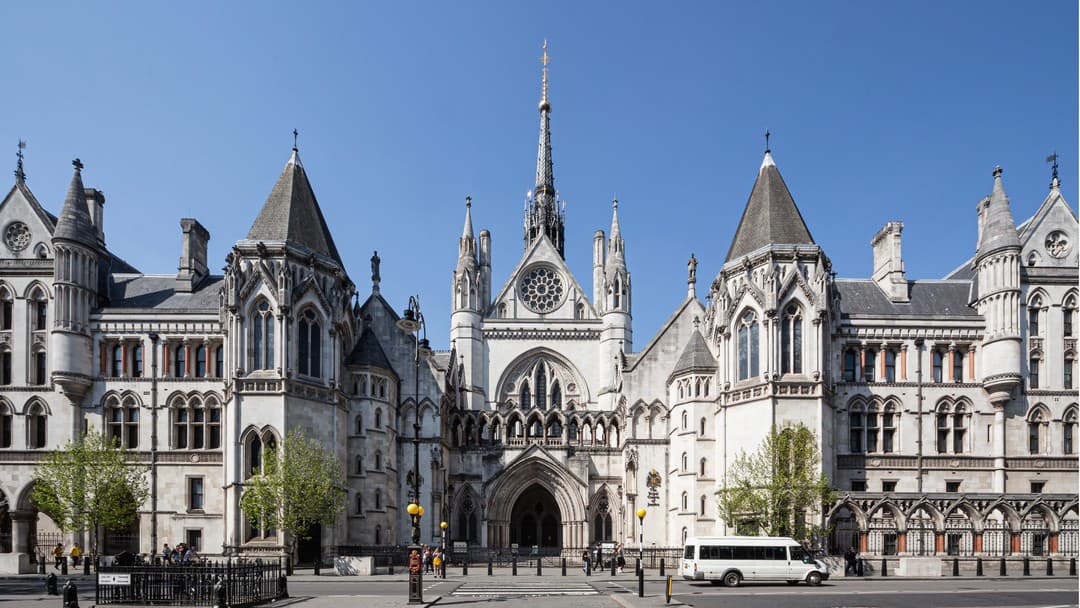
High Court quashes an ECF refusal riddled with factual errors, finding breaches on all three grounds.
The High Court has quashed a decision by the Director of Legal Aid Casework refusing exceptional case funding to a woman with severe anorexia nervosa who sought legal assistance to apply for a Home Office licence to access psilocybin as a supervised medical treatment. The judgement, handed down on 25 February 2026 by Deputy High Court Judge Susie Alegre, found the decision unlawful on all three grounds of review.
The claimant, EB, had participated in a clinical trial at Imperial College London in 2022 in which psilocybin — a Class A controlled drug — was administered as a potential treatment for anorexia. She reported meaningful improvement with no notable side effects, and sought to continue the treatment after the trial concluded. Because current Home Office policy does not contemplate applications by individuals, the process was complex, and EB argued she could not manage it without legal assistance. Her application for ECF was refused in February 2025.
A decision based on the wrong facts
The judgement is striking for the breadth of the factual errors underpinning the refusal. The decision maker proceeded on the basis that EB was seeking personal, unsupervised access to psilocybin — a mischaracterisation the Defendant ultimately accepted. In reality, the application concerned medically supervised administration, mirroring the conditions of the clinical trial. Similarly, the "sufficient benefit" analysis under regulation 32(b) of the Civil Legal Aid (Merits Criteria) Regulations 2013 applied a cost figure of approximately £180,000 when the actual proposed figure was around £40,000. The judge was blunt: a reasonable person of moderate means applying the correct figure and the correct facts would have reached a materially different starting point.
Article 8 and the engagement question
The decision maker concluded that Article 8 ECHR was not engaged, reasoning that the application did not concern healthcare or treatment. The judge found this analysis to be premised on the same factual misapprehension. Importantly, the decision itself appeared to acknowledge — somewhat inadvertently — that access to medical treatment would fall within the ambit of Article 8, citing the ECtHR Health Factsheet. Judge Alegre confirmed that engagement of Article 8 is a question of fact, and that circumstances involving treatment for a condition with such profound effects on daily life and life expectancy plainly engage the right. The question of whether a refusal would amount to a breach was, she observed, a separate matter for a later stage.
Gudanaviciene left unapplied
Having found that Article 8 was engaged, the judgement held that the Defendant failed to apply the Court of Appeal's guidance in Gudanaviciene [2014] EWCA Civ 1622. That guidance requires a structured assessment of the importance of the issues at stake, the complexity of the procedural and evidential questions, and — critically — the individual's ability to engage with the process given her personal circumstances. On the third factor, the decision contained no analysis whatsoever of EB's specific situation: her very low body mass index, her cognitive rigidity, her inability to manage stress or deviation from routine, and her loss of hope following the end of the trial.
The section 31(2A) argument rejected
The Defendant sought to rely on section 31(2A) of the Senior Courts Act 1981, submitting through a witness statement that the outcome would not have been substantially different even had the correct facts been applied. The judge rejected this. Drawing on Plan B Earth and the UTAG principles, she held that the witness statement amounted to a backdoor second decision based on an alternative set of facts, rather than genuine elucidation of the original reasoning. In circumstances where the decision was so fundamentally flawed, it was not possible to assess the "highly likely" test without impermissibly stepping into the role of the primary decision maker.
The decision of 11 February 2025 was quashed, with costs awarded to the claimant. The Director must now issue a fresh decision in accordance with the judgement.
 Copyright & permissions


.png&w=3840&q=60)