A report by the House of Commons Public Accounts Committee (PAC) into improving the services of the family courts, reveals some striking statistics which show that delays in resolving cases can enhance the risk of harm to children and add an additional financial burden onto the taxpayer.[1]
The report claims that, between the years 2018 and 2022, on average, legal aid spending increased two-fold on public law cases from £6,000-£12,000. This figure represents an annual uplift of £314 million in legal aid spending. Other claims made in the report include how, since 2014, the Government has failed to come good on its pledge to conclude care proceedings within 26 weeks, as well as a marked increase in the number of litigants in person from 13% in 2013 to 39% in 2024.
What’s more, the report showed that in 2024, 40% of cases did not have any legal representation for the applicants or respondents, a situation which amplifies time and pressure on an already stretched system. Not only this, the report found that over 4,000 children in England have been stuck in family court cases for more than 100 weeks, with a staggering 47,662 outstanding cases in private and public law in 2025.
However, these statistics are more than just negative press: they also highlight the damage being done to the lives, education and well-being of countless children.
It must also be said that the judiciary recruitment crisis is leading to an insufficient number of judges and social workers to meet the demand, leading to significant delays. According to recent statistics, as many as two in five judges are looking to leave within the next five years, representing a marked increase from 31% in 2024.[2]
The report maintains that “some of the most vulnerable people are subject to family Court proceedings, a claim which is backed up by a 2016 CAFCASS study. The study also posits that in nearly 62% of private law cases, allegations of domestic abuse are involved.” [3]
Furthermore, there was a 4% increase in domestic remedy order applications between April to June 2025 in comparison to April to June in the previous year, according to the most recent ONS statistics.[4]
The report shows that also claims the Pathfinder scheme, which aims to reduce delays and speed up affairs, is demonstrating potential. In March last year, the Ministry of Justice concluded that Pathfinder “delivers a better experience for children and families and a more efficient court process”[5], and that involving children more in the cases had developed an emphasis on “the right issues”, whilst prioritising the inclusion and involvement of the children. Pathfinder has also contributed to shorter proceedings. For example, in North Wales, on average, the length of private law proceedings decreased by 11 weeks, in large part as a result of the Pathfinder pilot.[6]
Nonetheless, whilst Pathfinder has delivered in some areas, the expansion of the scheme has taken time to grow, with only Wales, Birmingham, Solihull, Dorset and West Yorkshire currently taking part in the pilot.
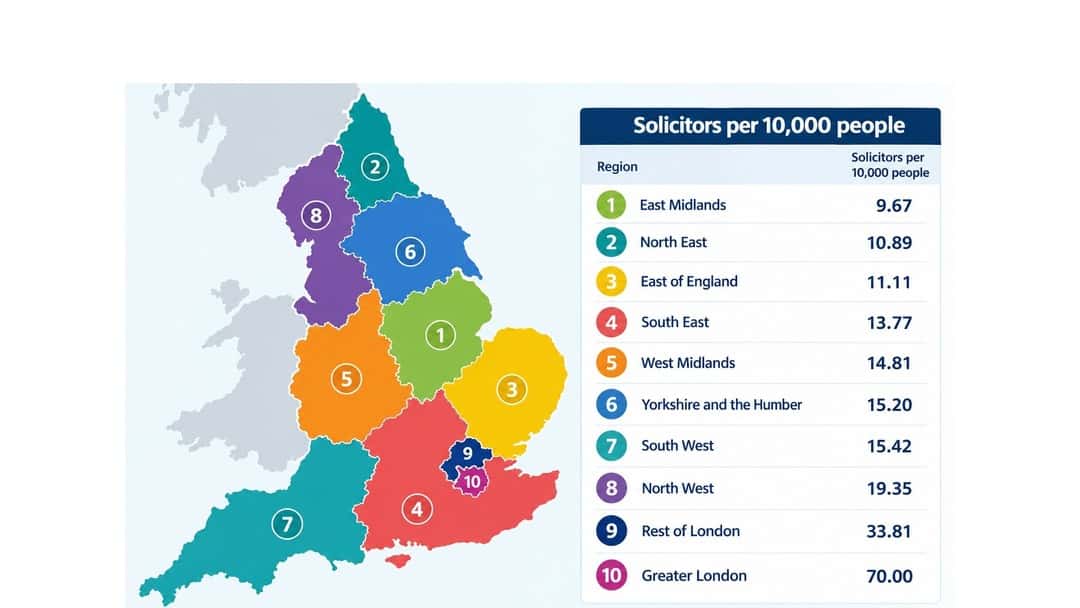
But in London, the case backlogs and resource shortages are at a crisis point. In the capital, on average, care cases last 53 weeks, whilst private law cases drag on for a staggering 70 weeks. When compared with Wales, the average is 24 weeks.[7] These stats show that areas with lower judicial capacity tend to cause longer delays.
The PAC pointed to a disjointed system exacerbating delays, as well as issues in determining accountability. It also found that the Family Justice Board, which was designed to help improve delays, had not succeeded in its goal because it hadn’t properly monitored the outcomes or the length of proceedings. As a result, it has so far failed to get a complete grasp of errors within the system – undermining the aim of the Board in the first place.
As the situation worsens week upon week, and the uncertainty grows, children are facing more and more emotional distress. For those involved in adversarial private law proceedings or caught up in complex child protection cases, this is particularly acute. Can a justice system which moves at such a snail’s pace really claim that it has children’s best interests at heart?
To make matters worse, it’s often said that finding a legal provider who is able to take on new cases is proving to be impossible for many clients who would be eligible for legal aid.
Above all, the frequent presence of domestic abuse allegations makes public law cases particularly traumatic, a burden compounded by the fact that parties often have to represent themselves.
Moreover, LiPs are often put off by the requirement of access to a computer and a solid technological literacy – without which, further delays result. For LiPs, unused to the process, the court’s imposition of administration and heavy procedural requirements onto them are a big deterrence. According to the PAC, the Family Courts are “complex”, “inefficient”, or even “difficult to navigate”, especially for families lacking in legal support.
So, what is the way forward? I would argue that the government must take four key steps. First, it must prioritise early intervention. This is due to many families being unable to access support services at the right time. So, the government should expand non-court dispute resolution (NCDR) and parenting programmes to reduce the likelihood of some disputes escalating to litigation.
Second, it should accelerate the national rollout of the Pathfinder model. Despite some of its limitations as outlined above, the data in the National Audit Office (NAO) report, entitled ‘Improving family court services for children’, found that Pathfinder leads to more child-centred decisions.
Third, the family courts need a cash injection. This should be a priority for the MoJ in order to address the severe lack of funding in the family courts, and its harmful ramifications. The situation is worse in areas like London where people on lower income salaries are finding themselves getting cashed out of access to justice as demand in the family courts skyrockets.
And last, the government should improve the process of how data is shared between agencies like the Department of Education, local authorities, MoJ and Cafcass. They should embrace a coordinated approach which would enable them to share information about the needs of children and their families more effectively. It would also help to reduce the risk of error, duplication and delay, which would make a substantial difference to the way proceedings are carried out and the impact on the individuals involved.
The government must listen to the family justice system, and stop pushing reform down the long grass. It must act now as a matter of urgency.
Sally Bradley,
Barrister at 4 PB.




 Copyright & permissions