


Crane Bank v DFCU Bank: High Court refuses late amendments to defence based on PwC reports
Court holds disputed amendments neither consequential nor adequately particularised, with trial prejudice decisive.
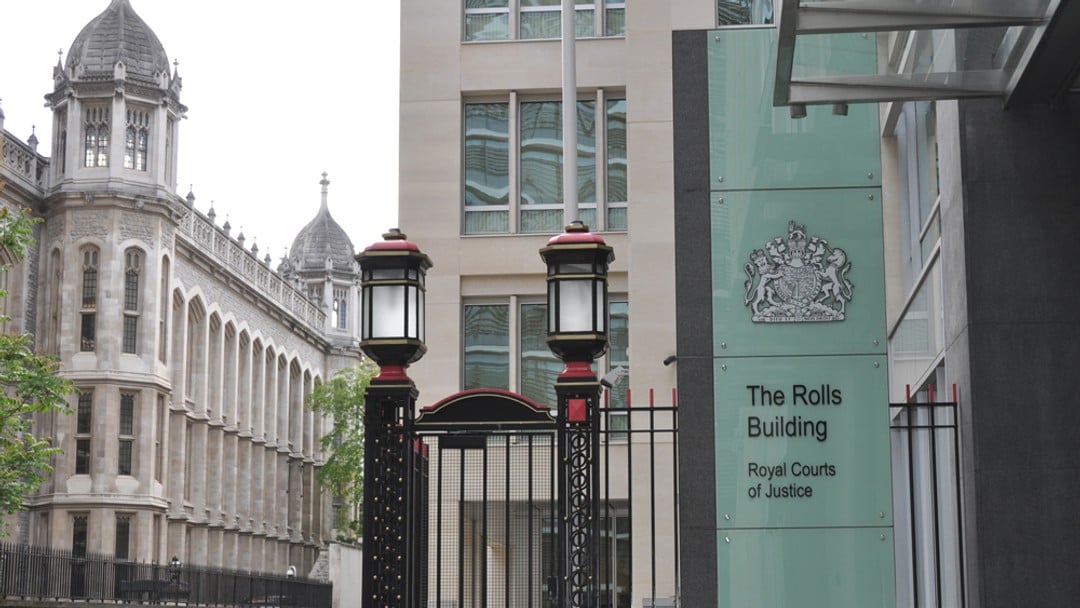
The Commercial Court has refused DFCU Bank Limited permission to introduce a series of specific mismanagement allegations against Crane Bank Limited into its defence, ruling that the proposed amendments were neither consequential on the claimants' earlier pleading changes nor sufficiently particularised to be permitted at this stage of proceedings. The judgement, handed down by Dame Clare Moulder DBE on 24 March 2026, comes less than seven months before a 12-week trial listed from October 2026.
The underlying claim arises from the 2017 acquisition by DFCU Bank of certain assets and liabilities of Crane Bank Limited ("CBL"), a Ugandan retail and commercial bank placed into receivership following intervention by the Bank of Uganda ("BoU"). The claimants, including CBL and its shareholders led by Dr Sudhir Ruparelia, allege a corrupt scheme to seize and sell the bank's assets. DFCU's longstanding defence is that CBL was mismanaged and significantly undercapitalised, making central bank intervention inevitable.
The disputed amendments, contained in a proposed new Annex One to DFCU's re-re-amended defence, sought to plead specific findings from two PricewaterhouseCoopers forensic reports as primary allegations of fact. The allegations spanned irregular lending practices, shareholding irregularities involving a company called White Sapphire, alleged false accounting entries relating to payments to a company called Interdico, and claims that CBL's management had impeded the BoU's investigation.
DFCU argued the amendments were "consequential" on the claimants' own re-amended particulars of claim and therefore already covered by a consent order made by Henshaw J in September 2025. Dame Clare Moulder rejected that argument. Applying the principle that a consequential amendment must be causatively linked to — that is, genuinely responding to — a change in the opposing party's case, she found that the claimants' pleading amendments were not substantively new allegations. The proposed Annex One, she concluded, represented "an attempt by the First Defendant to introduce wide ranging and specific allegations of mismanagement derived from the PWC reports" rather than a genuine response to any alteration by the claimants.
That conclusion was reinforced by history: DFCU had already sought to incorporate materially similar allegations by cross-referencing the PwC reports in an earlier amendment application, which a deputy judge refused in July 2025 ([2025] EWHC 1915 (Comm)). On that occasion permission was granted only for DFCU to plead that the BoU would have been entitled to regard the PwC findings as credible — not that those findings were true. The present application sought, in substance, to achieve what had previously been refused.
On the question of whether to grant permission in any event, Dame Clare Moulder applied the familiar balance-of-injustice test drawn from Quah Su-Ling v Goldman Sachs International and Essex County Council v UBB Waste. She found the amendments insufficiently particularised across the board. Allegations of irregular lending practices failed to identify the loans or relevant time periods; the White Sapphire shareholding allegation gave no proper basis for the claim that the company was owned or controlled by Dr Ruparelia; and the Interdico allegation, which concerned a complex alleged fraud dating to 2013, was described as unintelligible in its current form. The court also rejected DFCU's reliance on a hearsay notice to cure the pleading deficiencies, emphasising that a pleading cannot be rendered coherent by reference to facts scattered through an external document.
The case management consequences proved decisive. Permitting the amendments would require further disclosure searches going back well beyond the agreed date ranges — in some instances to 2006 — fresh factual witness evidence from individuals not yet engaged in the proceedings, and additional expert evidence across banking practice, forensic accountancy and potentially other disciplines. Given the time remaining before trial, the court found these steps could not be fairly accommodated. The prejudice to the claimants in allowing the amendments plainly outweighed any injustice to DFCU in refusing them.
The judgement serves as a clear reminder that ambitious late pleading applications face compounding difficulties where earlier, analogous attempts have already failed, and where the detail required to make good the allegations substantially exceeds what the litigation timetable can absorb.
 Copyright & permissions