Court of Appeal dismisses Rana Kabbani Seale's contempt conviction challenge
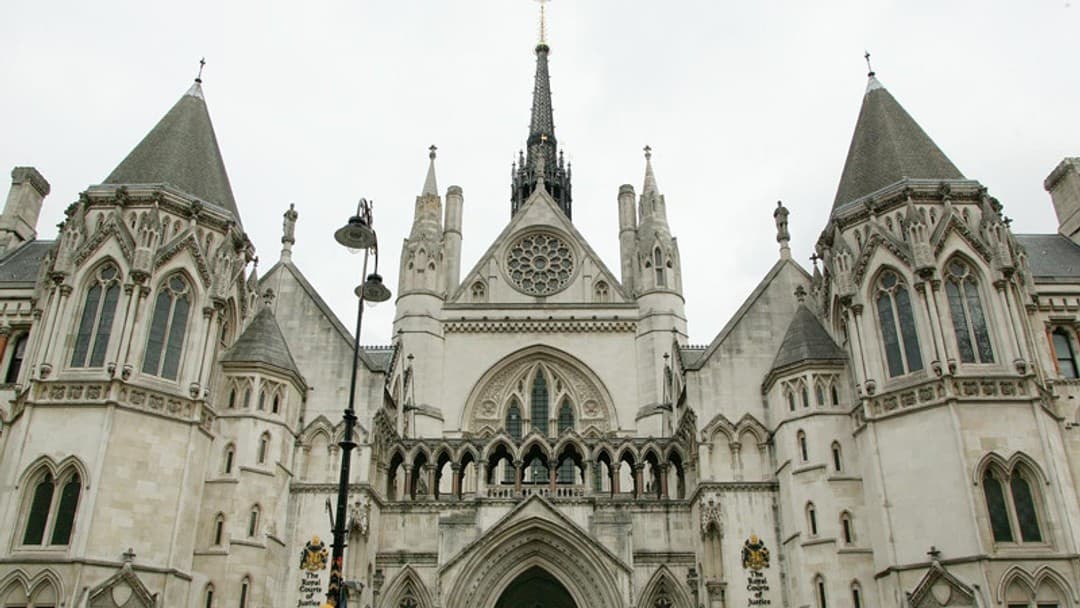
Court upholds six-month suspended sentence for persistent breach of court communication order.
The Court of Appeal has dismissed a challenge brought by Dr Rana Kabbani Seale against a finding of contempt of court and a six-month suspended custodial sentence arising from her repeated breach of a court order governing her correspondence with the Chancery Division. The judgement, handed down on 27 March 2026 by Lord Justice Cobb and Lord Justice Miles, addresses a range of questions concerning the court's inherent jurisdiction, the standing of the Solicitor General, and the scope of a litigant's right of access to justice.
Dr Seale is a party to long-running probate proceedings concerning her late husband's estate. Following numerous applications dismissed as totally without merit, Bacon J made an Extended Civil Restraint Order against her in November 2021. A further order made in March 2023 — endorsed with a penal notice — prohibited Dr Seale from emailing individual members of court staff and restricted her correspondence through the generic Chancery email address to "routine administrative matters" only. Formal applications were to be made by application notice with the appropriate court fee.
The Solicitor General applied to commit Dr Seale in June 2024, relying on 28 alleged breaches occurring between April 2023 and April 2024. Mr Justice Rajah found 27 of the 28 communications to be in breach of the order. The correspondence included multi-page letters directing serious allegations of judicial misconduct, criminality and bias at Bacon J — one accusing her of "vicious intent" and attributing her conduct to an "Islamophobe Indian background" — as well as threats of criminal prosecution if she declined to recuse herself. None of this constituted routine administrative correspondence. The judge assessed culpability as high, harm as moderate, and — taking account of Dr Seale's age, medical conditions and caring responsibilities — arrived at a sentence of six months' imprisonment, suspended for two years.
On appeal, Dr Seale advanced twelve grounds. The Court of Appeal rejected each in turn.
The submission that the criminal standard of proof had not been applied was dismissed: the trial judge had expressly applied that standard throughout. The contention that the judge had substituted a personal interpretation of "routine administrative matters" for an objective one was equally rejected — the order itself gave illustrative examples and the judge had assessed each of the 28 communications individually.
The court rejected the argument that the Solicitor General lacked standing, confirming that the Attorney General's well-established right to bring contempt proceedings in the public interest is exercisable by the Solicitor General by virtue of section 1 of the Law Officers Act 1997. That public interest plainly existed here: court orders designed to protect judicial resources would be entirely unenforceable without recourse to such proceedings.
On jurisdiction, Dr Seale argued that the 2023 Order could only have been made by the Divisional Court on the Attorney General's application under section 42 of the Senior Courts Act 1981, and that she had an unqualified constitutional right to correspond with the court. Both propositions were rejected. The court reaffirmed the principle in Bhamjee v Forsdick (No 2) [2004] 1 WLR 88 that the inherent jurisdiction to regulate court processes is available to all divisions of the High Court and is not confined to section 42 applications. The right of access to justice is not absolute and may be subjected to proportionate regulation, provided its essence is not impaired. The 2023 Order satisfied that standard: it did not prevent Dr Seale from making applications, filing bundles or participating in hearings — it prevented only abusive correspondence.
The court also confirmed that an order must be obeyed unless and until it is stayed or set aside, regardless of whether the respondent considers it to have been wrongly made. This principle, the court observed, underpins the rule of law in a democratic society.
The suspended sentence was not found to be manifestly excessive, the only basis on which the appellate court would interfere with sentence. The costs order was similarly upheld, the court noting that civil proceedings brought by the Solicitor General are not a criminal prosecution and that a paying party's inability to meet a costs award is a matter for enforcement rather than a reason to decline the order.
 Copyright & permissions



b89ee.jpg&w=3840&q=60)