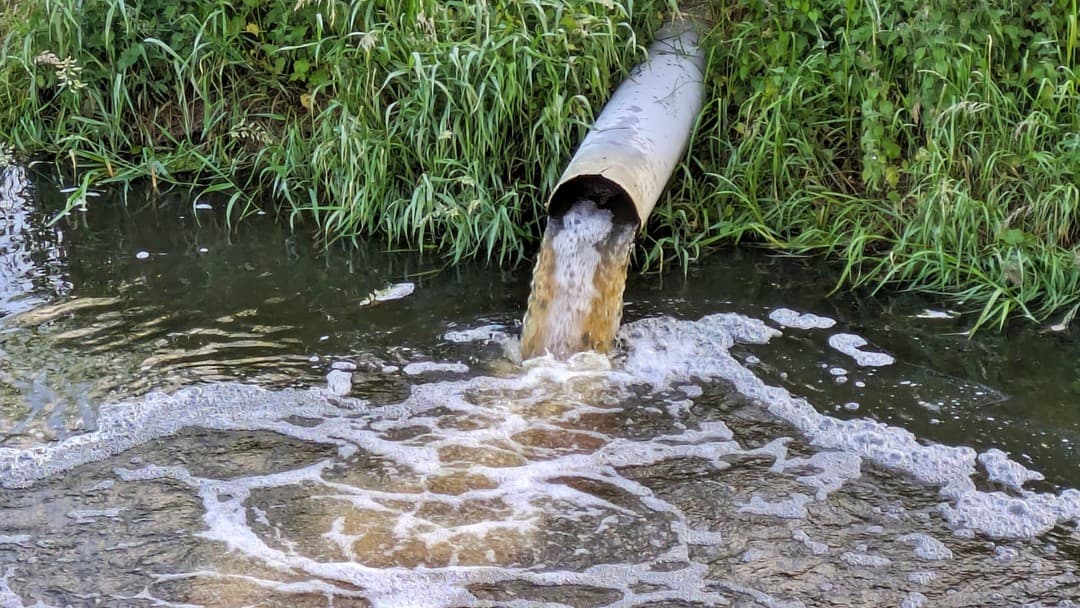
The water industry has been mired in controversy: sewage in rivers, executive bonuses paid out despite multi-million fines, a regulator accused of capture, and Thames Water at the brink of insolvency.
Against that backdrop, the Court of Appeal’s decision in Roberts v Severn Trent Water [2026] EWCA Civ 222 is deeply troubling: a statutory regime designed to protect consumers from monopoly overpricing has been interpreted, by a majority of two to one, to shield water companies from the competition law claims brought to recover sums allegedly appropriated by gaming that very regime.
The saga begins with Professor Carolyn Roberts bringing opt-out collective proceedings in the Competition Appeal Tribunal (the CAT) against six water and sewerage undertakers, alleging abuse of dominant position through the systematic under-reporting of pollution incidents to Ofwat and the Environment Agency, leading to inflated consumer bills. Overcharging was possible, on Prof Roberts’ case, because Ofwat's periodic regulatory price reviews did not take into account the true number and scale of pollution incidents. Millions of customers had, on the pleaded case, been systematically overcharged.
The legal basis pleaded was abuse of dominant position under section 18 of the Competition Act 1998 (CA1998), relying on AstraZeneca (Cases T-321/05 and C-457/10P) to demonstrate that misleading a public regulator can be a form of abuse of dominance.
Critically, the CAT found that, but for the statutory prohibition under section 18(8) of the Water Industry Act 1991 (WIA1991), it would have granted a Collective Proceedings Order in each case, allowing them to proceed to a full trial.
Prof Roberts did not frame her case as one of excessive and unfair pricing, as is more 'typical' of exploitative abuse cases. The CAT accepted that such a claim would be free to proceed despite the statutory prohibition, a point which may yet prove significant.
The Court of Appeal majority
Section 18(8) WIA1991 excludes remedies available only “by virtue of” an act constituting a contravention of a condition of appointment. Following the Supreme Court decision in United Utilities v Manchester Ship Canal (No 2) [2024] UKSC 22 (MSC2), the test is whether breach of the licence condition is an “essential ingredient” of the claim.
The majority, comprising the Master of the Rolls and Lady Justice Falk, concluded that it was. Their reasoning: Ofwat could only have been “misled” because it assumed the water companies were complying with Condition B of their appointment, which required accurate pollution reporting. Without that obligation, there would have been no basis for Ofwat to rely on the information at all. The breach and the “misleading” were, said the majority, “two sides of the same coin”. They acknowledged that theirs was a “purposive and realistic” reading, and that Zacaroli LJ adopted a “more black-letter approach”, a framing which itself signals departure from the provision’s plain language.
The dissent and competing analysis
Zacaroli LJ’s dissent offers a persuasive analysis. According to MSC2, the prohibition in section 18(8) WIA1991 is only engaged with respect to claims in which the availability of the remedy depends on the act constituting a contravention - not merely that the same act also happens to be a contravention. This may be a fine distinction, but it is far from hair-splitting and determines whether millions of consumers retain any private remedy at all.
The essential ingredients of Prof Roberts’ claim are: inaccurate information was provided to Ofwat; Ofwat was induced to set Revenue Allowances too high; the companies charged customers higher prices accordingly; customers suffered loss. None of those elements requires establishing that the inaccuracy constituted a breach of Condition B. As Zacaroli LJ observed, whether information is accurate is judged by the purpose for which it was required and the use made of it, not by its regulatory classification. The licence condition breach features as evidentiary background. It is not a constitutive element of the abuse.
The AstraZeneca cases further illustrate the point. AstraZeneca had no legal obligation to make representations to patent authorities; misleading those authorities was nonetheless an abuse of dominance. A dominant firm’s special responsibility not to mislead public bodies does not depend on any legal duty to report. The majority’s approach affords greater protection to dominant undertakings operating under a statutory reporting regime than to those unconstrained by any such obligation.
Implications for consumers and the regulatory regime
This is particularly acute in circumstances where a key objective of the WIA1991 regime is the protection of consumers from exercise of undue market power by the water companies, which hold statutory regional monopolies granted on a specific quid pro quo: Ofwat’s price controls as a substitute for the competitive discipline the market would otherwise provide to prevent exploitation of captive customers.
When a water company systematically misreports pollution incidents so that Ofwat sets the price cap too high, it is not merely breaching a licence condition; in addition, it is subverting the structural safeguard that constrains its monopoly privilege. In short, the water companies are in the position of benefiting from a statutory monopoly, exploiting the protection that monopoly affords, and then invoking the same statute to defeat the only private law avenue available to those they have exploited.
The customers who absorb the resulting overcharge have no market exit and no competitive alternative. The majority’s interpretation leaves them without a private law remedy. They are left to rely on Ofwat’s enforcement appetite; cold comfort, given the regulator’s record, for wrongs that may already be historic.
All of this happens in the wider context of an industry which has suffered decades-long over-leveraging by private equity firms, with borrowed funds routinely extracted via dividends and executive bonuses, leaving the companies with multi-billion-pound debt piles. According to this narrative, the dismal financial position of Thames Water is only a symptom of a wider malaise and there is a serious risk that the very same customers whose private law remedies were denied by the Court of Appeal will be left to pick up the ultimate bill of regulatory failure.
Whether Parliament intended section 18(8) to achieve this outcome deserves Supreme Court scrutiny. Section 31(3) WIA1991 expressly preserves concurrent jurisdiction under competition law, recognising that the regulatory regime and competition law operate alongside one another rather than one displacing the other.
As Zacaroli LJ concluded, excluding claims that rely on a regulatory regime being manipulated is fundamentally different from excluding claims that depend on the act constituting a breach of the licence conditions. The latter is what section 18(8) does. The former, troublingly, is what the majority delivers.
Disclaimer – Leigh Day represented Professor Roberts, preparing and filing of the claims for certification, but since April 2024, prior to the MSC No 2 Supreme Court Judgment, Prof Roberts transferred the claims to other solicitors.




 Copyright & permissions
.jpg&w=3840&q=60)

-cropped-6au25meu.jpg&w=3840&q=60)




.JPEG&w=3840&q=60)