Couples increasingly turning to court for divorce finances
The rise in couples applying for court-led financial remedies reflects heightened financial anxiety amid living cost pressures
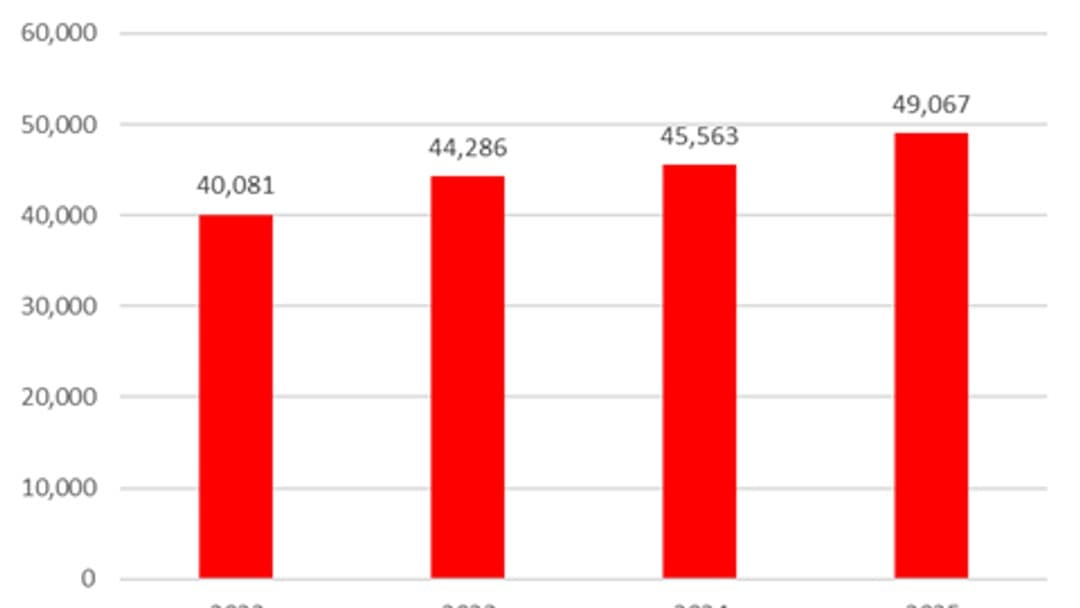
The number of couples opting to take their financial disputes to court during a divorce has reached the highest level in 15 years, as the ongoing cost-of-living crisis intensifies worries about financial stability. According to data from the Ministry of Justice, there were 49,067 applications for financial remedies in the family courts in 2025, marking a significant increase from previous years and the highest figures recorded since 2010 when applications peaked at 51,681. Interestingly, this trend is not linked to an increase in divorce rates; in fact, divorce numbers have seen a decline following the introduction of no-fault divorce legislation in 2022.
Nockolds, a prominent law firm, explains that the rising applications for financial remedy reflect growing concerns among couples about their long-term financial security. Kaja Viknes, Senior Associate at Nockolds, states that “what we are seeing is a direct response to financial anxiety. Rising living costs, mortgage pressures and uncertainty about the future mean that divorcing couples simply cannot afford to leave their finances unresolved.” This marks a reversal of the trend towards informal divorce arrangements, as more couples are reluctant to leave financial matters untied.
Since the start of the cost-of-living crisis in 2022, applications for financial remedy have surged by 22 per cent from 40,081 in 2022. Viknes further explains that even couples without substantial matrimonial assets are now seeking formal financial settlements to ensure they secure a clean break and shield themselves from potential future claims. Many individuals who had previously concluded their divorces informally are returning to the courts to formalise financial arrangements that they initially left open, highlighting the fragility of informal agreements.
Kaja Viknes warns that “informal financial agreements are incredibly fragile. They might feel convenient at the time, but they offer no real protection.” Many couples have found themselves at a loss when these agreements are challenged, as they often lack the enforceability required by the courts. This has led to a noteworthy rise in couples forced to navigate the formal financial remedy process after failed attempts at DIY consent orders. Viknes elaborates that such unsuccessful attempts typically stem from incomplete information or poorly structured arrangements, leading to complications that prolong the divorce process.
The current landscape presents challenges for individuals amidst the tumult of economic uncertainty. “DIY agreements often work only for as long as both parties are financially comfortable,” Viknes explains, pointing out that changes in circumstances can quickly unravel informal settlements. As couples grapple with rising bills and fluctuating job security, many ultimately recognise that a formal financial remedy is necessary to safeguard their interests and achieve a more favourable settlement.
The growing propensity for couples to seek legal recourse underlines the importance of protecting oneself during a divorce, as increasingly tumultuous economic conditions require clarity and enforceability to navigate the aftermath of a marriage. According to Viknes, “the number of divorce cases surged to a decade high in 2022 following the introduction of no-fault divorces,” yet many are now experiencing the complications of revisiting their financial agreements due to the inadequacies of prior informal arrangements. The indication here is clear: as financial anxieties mount, couples are increasingly turning towards the courts, seeking security in the face of uncertainty.
 Copyright & permissions