Cooper v Ludgate House: when Part 36 offers include extraneous property rights
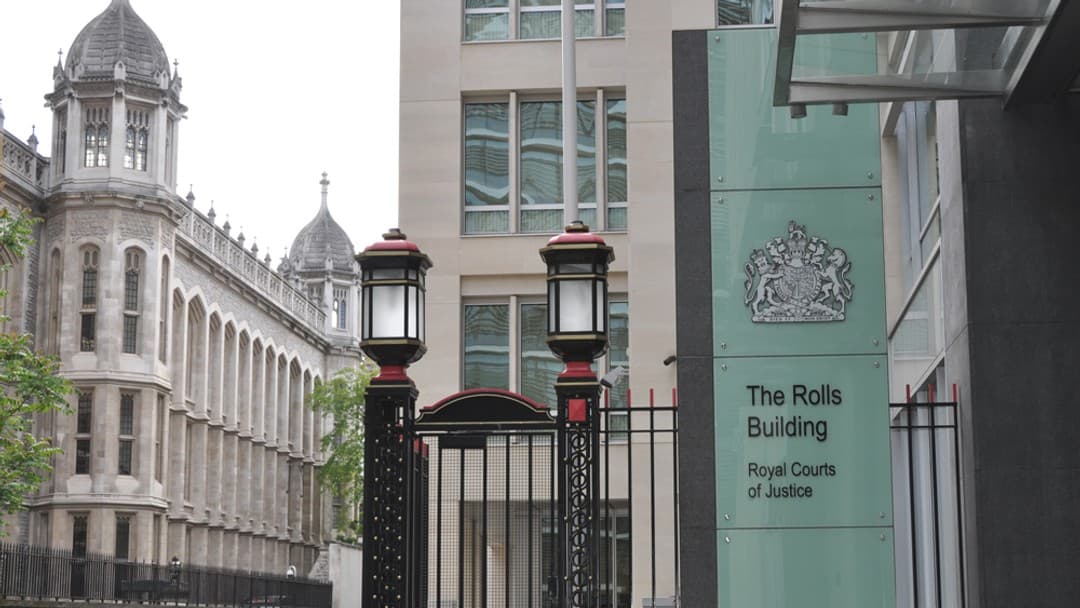
A High Court costs judgement clarifies the scope of valid Part 36 offers and the treatment of future statutory compensation claims.
In Cooper & Ors v Ludgate House Limited [2026] EWHC 484 (Ch), Mr Justice Fancourt delivered a consequential costs judgement following his earlier finding that the defendant's construction of Arbor had infringed the claimants' rights to light. The substantive judgement, handed down in July 2025, had awarded negotiating damages of £350,000 to Mr Cooper and £500,000 to Mr and Mrs Powell in lieu of the mandatory injunctive relief they had primarily sought.
The costs hearing raised two questions of broader significance: who constituted the successful party for the purposes of CPR rule 44.2, and whether the defendant's November 2024 Part 36 offers — each for £500,000 — were valid offers capable of triggering the consequences under rule 36.17.
Identifying the successful party
Despite the claimants having recovered substantial sums, the defendant argued that they had failed to achieve what they set out to achieve — the preservation of their light — and should not be treated as the successful party. Fancourt J rejected this framing. Applying the questions posed in Roache v News Group Newspapers Ltd [1998] EMLR 161, he held that the claimants had won something of real value that required fighting the action to its conclusion and, while the defendant had denied them their first prize, the claimants remained the successful parties overall.
That said, the injunction issue was of considerable importance, warranting a reduction in the costs awarded. Mr and Mrs Powell, who comfortably beat the November 2024 offer, were awarded two-thirds of their costs. Mr Cooper's position was more nuanced.
The Part 36 validity question
The November 2024 offers were unusual. Each offered £500,000 not merely in settlement of the pleaded claims but also in exchange for a release of the relevant claimant's rights to light over adjoining land and any future claim for statutory compensation under section 204 of the Housing and Planning Act 2016. Mr Cooper argued the offer could not be a valid Part 36 offer because it went beyond the claim: it did not, he submitted, "relate to the whole of the claim" within the meaning of rule 36.5(1)(d), but rather to the whole of the claim and something else.
Fancourt J disagreed. Drawing on Calonne Construction Ltd v Dawnus Southern Ltd [2019] 1 WLR 4793, the obiter observations in Coldunell Ltd v Hotel Management International Ltd [2022] Costs LR 1873, and Hildyard J's analysis in Grant v FR Acquisitions Corporation (Europe) Ltd [2022] EWHC 3366 (Ch), he concluded that rule 36.5(1)(d) is a labelling requirement — it requires the offer to identify whether it relates to the whole claim, a part, or an issue, so that the offeree understands the scope of what is being proposed and the consequences that would follow. It does not impose a ceiling on the terms the offer may contain. An offer expressed as relating to the whole of the claim is such an offer; terms that go beyond the strict bounds of the pleaded case do not disqualify it.
The safeguard against oppressive or difficult-to-evaluate offers lies not in restricting their content but in the burden placed on the offeror. Where the offer includes extraneous rights or future claims, the offeror must prove that the claimant failed to obtain a more advantageous judgement — a comparison that may be impossible or highly speculative to perform. In Mr Cooper's case, the value of his retained rights to light and future section 204 entitlement was undetermined and could not safely be assessed as less than the £115,000 shortfall between his damages award and the £500,000 offered. The defendant therefore could not establish that the offer had been beaten, and the rule 36.17 consequences did not apply.
Costs outcome for Mr Cooper
Nonetheless, Fancourt J reduced Mr Cooper's costs recovery to one-third. Mr Cooper had made a counter-offer of £7 million — a figure characterised as an attempt to extract a ransom value during the period when injunctive relief remained a live prospect — and had shown no genuine interest in settlement within any reasonable range. The court was prepared to take that conduct into account in the exercise of its discretion under rule 44.2, even where the Part 36 mechanism itself was unavailable to the defendant.
Practical significance
The judgement confirms that defendants may structure Part 36 offers to include releases of future or collateral rights without forfeiting the offer's Part 36 status. The corresponding discipline is that they must also bear the burden of establishing, at any subsequent costs hearing, that the judgment obtained was less advantageous than the composite offer — a task that may prove difficult where the value of those additional elements is inherently uncertain.
 Copyright & permissions

.jpg&w=3840&q=60)
-cropped-6au25meu.jpg&w=3840&q=60)




.JPEG&w=3840&q=60)