

Choksi v Government of India: security for costs in international kidnapping claim
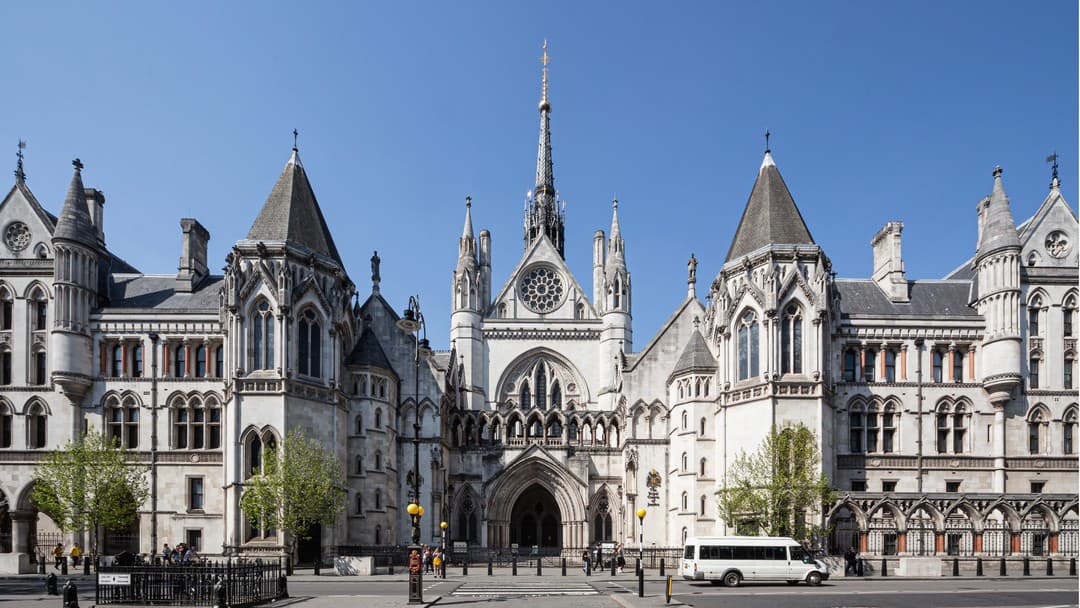
High Court grants £677,000 security despite serious allegations of state-sponsored kidnapping and torture.
In Choksi v Government of India [2026] EWHC 217 (KB), Mr Justice Mansfield addressed applications for security for costs totalling £800,000 in a claim arising from an alleged international kidnapping conspiracy. The case raises important questions about the intersection of serious tort allegations, jurisdictional challenges, state immunity and enforcement risks.
The claimant, an Indian businessman residing in Antigua and wanted by India for economic crimes, alleged he was kidnapped on 23 May 2021 and forcibly transported by boat to Dominica. He brought proceedings against six defendants, including the Indian Government, claiming they conspired to unlawfully render him to India. The individual defendants—variously Indian, British and Hungarian nationals residing in England—were alleged to have hatched the conspiracy in England before travelling to Antigua to execute the kidnapping.
The second, fourth, fifth and sixth defendants applied for security for costs covering their expenditure up to conclusion of forthcoming jurisdictional and state immunity applications. All defendants contested jurisdiction, arguing England was not the appropriate forum, and sought to rely on state immunity defences. The claimant resisted, arguing his claim had a high probability of success and that ordering security would be manifestly unjust given the gravity of the allegations.
The court applied the amended CPR 25.27, which requires the court to be satisfied that ordering security is just in all the circumstances. The sole gateway condition relied upon—the claimant's residence outside the jurisdiction—was satisfied, leaving discretion as the central issue.
Addressing the substantive merits, Mansfield J emphasised the established principle that courts should not investigate merits in detail unless there exists a high degree of probability of success or failure. The claimant relied heavily on circumstantial evidence, hearsay police reports and investigative materials. Whilst acknowledging that circumstantial evidence can be powerful, the judge found it impossible to form a meaningful assessment without the full evidentiary picture that would emerge at trial, including tested witness evidence and comprehensive documentary disclosure.
The claimant's reliance on a media interview with the fifth and sixth defendants, during which counsel suggested they appeared "shifty", exemplified the difficulties. The court declined to evaluate witness credibility through such material, emphasising that demeanour and answers required proper testing through cross-examination at trial.
On jurisdictional issues, the court rejected the submission that the defendants' forum non conveniens challenge was "hopeless" merely because multiple potential alternative fora existed (Antigua, Dominica and St Vincent). The events occurred entirely outside England, with witnesses and documents located in those jurisdictions. Similarly, arguments concerning state immunity—whether individual defendants could invoke such immunity whilst denying agency, and whether acts in England satisfied the section 5 State Immunity Act 1978 exception—were found arguable either way rather than demonstrating high probability of claimant success.
Regarding enforcement risk, the court identified substantial obstacles: the claimant's residence abroad, his remand in Belgium pending extradition proceedings, frozen assets in India, and complete absence of evidence concerning assets in any jurisdiction. These factors created real risk that any costs order would prove unenforceable.
The court rejected the stifling argument, noting the claimant provided no detailed financial evidence beyond his wife's statement that substantial security would require them to "seriously consider" continuing litigation—falling short of demonstrating the claim would actually be stifled.
Security was ordered at £425,000 for the second and fourth defendants (reduced from £500,000 by eliminating duplicative junior counsel costs) and £252,000 for the fifth and sixth defendants, totalling £677,000. The court confirmed defendants sued personally were entitled to defend themselves independently, justifying specialist leading counsel despite the first defendant's separate representation.
 Copyright & permissions





.jpg&w=3840&q=60)

-cropped-6au25meu.jpg&w=3840&q=60)

.JPEG&w=3840&q=60)

