Bruce and Thornton v HS2: defamation claims over Panorama documentary dismissed

Whistleblowers' defamation claims against HS2 Ltd over BBC Panorama documentary rejected at preliminary hearing.
The High Court has ruled that a BBC Panorama documentary about the troubled HS2 railway project did not convey defamatory meanings about two former employees who appeared as whistleblowers in the programme.
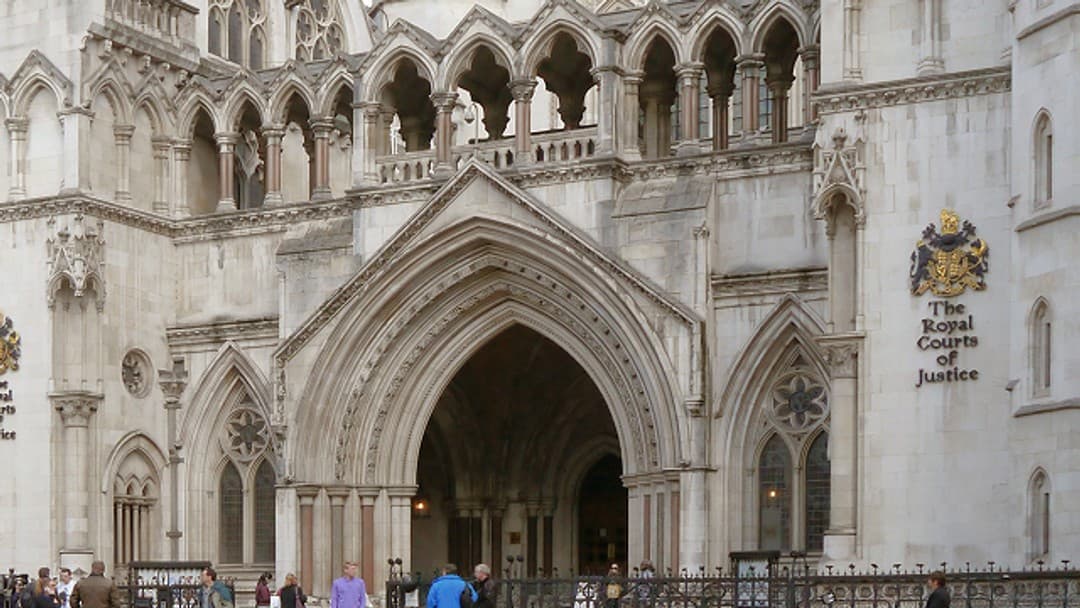
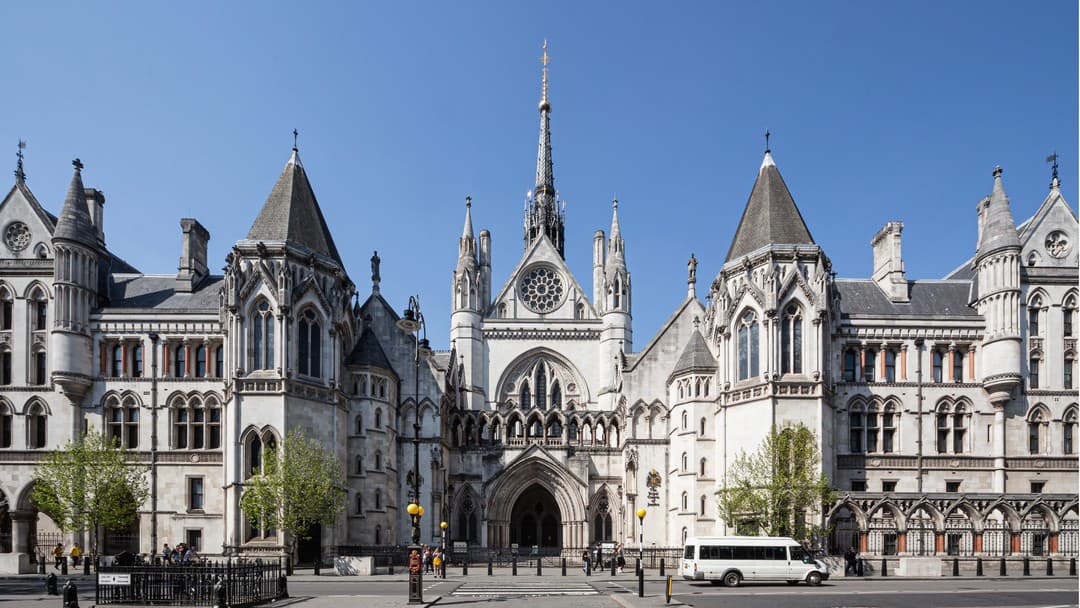
Mrs Justice Collins Rice delivered judgement on preliminary issues in claims brought by Andrew Bruce and Douglas Thornton against High Speed Two (HS2) Ltd concerning the broadcast 'HS2: The Railway that Blew Millions' on 16 September 2024.
Both claimants were senior employees of HS2 Ltd who had raised concerns about the project's spiralling costs and land acquisition budget. Mr Bruce, a chartered civil engineer with extensive military infrastructure experience in Iraq and Afghanistan, served as Head of Planning and Performance in the Land and Property Department between November 2015 and May 2016. Mr Thornton, a chartered surveyor with over 30 years' experience, was employed to purchase all required land from London to Manchester and Birmingham, leaving in December 2015.
In the programme, both men gave detailed accounts alleging they had identified significant budget overruns, were provided with misleading figures for external presentation, and were summarily dismissed after raising concerns. The programme included three responsive statements from HS2 Ltd stating it did not recognise the allegations, that both men had failed their probationary periods, and that their allegations were 'simply untrue'.
The claimants' concerns
Mr Bruce and Mr Thornton argued the programme conveyed defamatory meanings suggesting they had lied about serious allegations against their former employer and had been rightly dismissed for professional incompetence or misconduct. They contended the responsive material from HS2 Ltd portrayed them as disgruntled former employees making dishonest grievances.
Counsel for the claimants submitted that whilst they had agreed to participate as whistleblowers, HS2 Ltd's responses meant viewers would understand them as having been dismissed for failures on their part and as lying about what they revealed.
Judicial approach
Mrs Justice Collins Rice adopted the standard preparatory approach, watching the entire hour-long programme once without reference to the case papers before examining the parties' submissions in detail. She emphasised the importance of assessing the programme as an audiovisual entity experienced as a single event, rather than through detailed textual analysis of transcripts.
The court applied established principles from Koutsogiannis v Random House and subsequent authorities, noting that particular care is required when determining the meaning of television broadcasts, as ordinary viewers cannot typically watch material more than once and the court must guard against over-analysis.
Assessment of the programme
The court found the programme was characteristic Panorama journalism investigating a serious issue of public interest. Whilst not neutral about whether something had gone wrong with the HS2 project, it was largely questioning rather than definitive in its conclusions.
Critically, the judge noted the stark contrast in how the claimants and HS2 Ltd's responses were presented. The claimants appeared on camera as credible professionals giving detailed first-hand accounts, illustrated with dramatic reconstructions. Their credentials were prominently featured, and they were interviewed in an attentive, respectful manner. HS2 Ltd's responses, by contrast, were delivered principally through brief, deadpan voiceover quotations illustrated with empty office chairs and blurred backgrounds.
The court found that an ordinary reasonable viewer would understand HS2 Ltd's statement that it 'doesn't recognise these allegations' as 'a disengaged and conventional evasive formula' wholly disproportionate to the specific accounts given. The reference to failed probationary periods would be understood as 'a conventional circumlocution for a rapid summary dismissal of a whistleblower', immediately contradicted by the claimants with no supporting evidence offered.
The single natural and ordinary meaning
Mrs Justice Collins Rice determined that the programme's single natural and ordinary meaning in relation to each claimant was that he is a whistleblower with strong credentials giving a clear and compelling account raising issues of public concern about HS2 Ltd's competence, transparency, probity and accountability, with reason to believe he was dismissed for whistleblowing, and that HS2 Ltd's response does not provide a satisfactory answer.
The court found this meaning was factual, save for the final element regarding the inadequacy of HS2 Ltd's response, which was an expression of editorial opinion.
Defamatory at common law?
Applying the established test of whether the meaning would substantially affect in an adverse manner the attitude of others towards the claimants, the court concluded the programme was not of defamatory tendency at common law.
The judge reassured the claimants that an ordinary reasonable viewer would not think seriously the worse of them. On the contrary, viewers would understand the programme to have presented them as senior, experienced professionals with something important to say about their time at HS2 Ltd which had a strong claim to be taken seriously in the public interest.
The court observed that experiencing HS2 Ltd's responsive comments as sufficiently impactful to damage the claimants' reputations would require a focus not warranted by the programme's context and 'a viewing mindset unduly suspicious of the Claimants and unduly naïve and literal-minded in relation to HS2 Ltd's responses'. This was not the mindset of an ordinary reasonable viewer.
Mrs Justice Collins Rice concluded that whilst the claimants appeared among the protagonists with whom viewers would readily identify, HS2 Ltd appeared as a corporate public body about whom important questions had been raised to which it had yet to give satisfactory answers. A defamation claim against HS2 Ltd could not therefore be regarded as an appropriate vehicle for pursuing any grievance about their presentation in the programme.
 Copyright & permissions