Appadoo v SBM Bank: Privy Council clarifies continuous employment and interest on severance awards
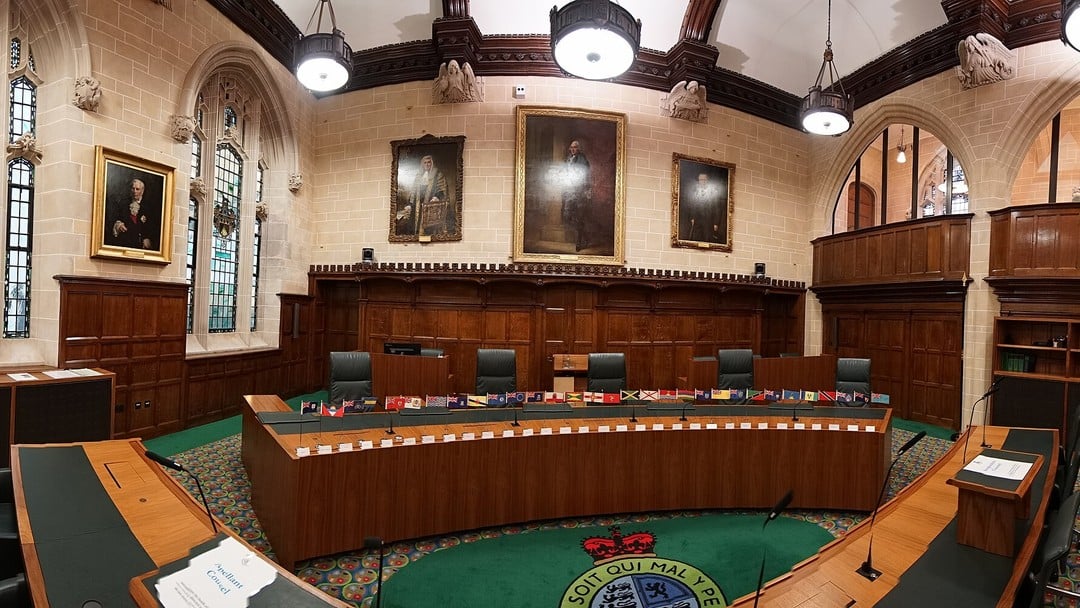
Dismissal following 37 years' service leads to landmark ruling on employment continuity and interest.
The Privy Council has dismissed SBM Bank (Mauritius) Ltd's appeal in Chandradev Appadoo v SBM Bank (Mauritius) Ltd [2026] UKPC 12, upholding the Supreme Court of Mauritius's finding that Mr Appadoo had been in continuous employment with the Bank for 37 years — not four. The Board also allowed Mr Appadoo's cross-appeal on interest, substituting an award at the legal rate of 4.5% per annum for the Supreme Court's outright refusal to award any interest at all.
Mr Appadoo commenced employment with the Bank in June 1980 and rose to the position of Divisional Leader Finance and ex-officio board member. Following a series of fixed-term contracts, his employment was terminated for gross misconduct in December 2017. The Industrial Court found the dismissal procedurally unlawful and awarded severance pay, but accepted the Bank's contention that a break of more than 28 days in Mr Appadoo's employment — between 24 November and 24 December 2012 — meant his continuous service ran only from December 2012, reducing his severance award dramatically.
The Bank's case rested principally on an exit procedure checklist, internal communications deactivating Mr Appadoo's systems access, and a letter to the Bank of Mauritius stating that his employment had expired on 24 November 2012. However, the Bank had never pleaded that his contract ended by mutual agreement, had adduced no written or oral evidence of any such agreement, and had not put the point to Mr Appadoo in cross-examination. The Industrial Court made no finding that his employment had been terminated by mutual agreement — and no finding at all as to whether Mr Appadoo had actually continued working during the disputed period, as he maintained.
The Privy Council affirmed that an appellate court may only interfere with findings of fact where there is no evidence to support them, or where the conclusion cannot reasonably be explained or justified. Applying that standard, the Board agreed with the Supreme Court that the Industrial Court's finding was erroneous. A conclusion that a contract of employment was terminated by mutual agreement requires underlying findings of fact identifying the parties, how the agreement was reached, and whether the employee accepted the termination. None of those findings had been made. The exit checklist was, at best, consistent with an internal belief within the Bank's HR function; it evidenced no communication with or acceptance by Mr Appadoo. The Bank's appeal was accordingly dismissed.
On the cross-appeal, the Board set out important guidance on the discretionary power under section 46(11) of the Employment Rights Act 2008 to award interest on severance allowances at a rate not exceeding 12% per annum. The Board confirmed that interest is compensatory in nature — designed to reflect the employer's use of money to which the dismissed employee was entitled — and that the discretion cannot properly be used to penalise an employee for the manner in which litigation has been conducted; costs orders are the appropriate mechanism for that. Where an employer reasonably disputes liability, it may be appropriate to run interest from the date of judgement rather than the date of termination. However, absent specific justification, the interest rate should not fall below the legal rate of 4.5% fixed under article 1153 of the Mauritius Civil Code — particularly given that section 46(11) is intended to provide a more beneficial regime than article 1153. The Board exercised the discretion afresh, awarding interest at 4.5% from the date of the Industrial Court's judgement.
The case is a useful reminder that documentary evidence of internal administrative steps taken by an employer — however consistent with a belief that employment has ended — will not suffice to establish termination by mutual agreement in the absence of evidence that the employee was informed of, and accepted, the premature end of the contract. It also provides clear authority that interest awards under section 46(11) should not fall below the prevailing legal rate without articulated justification.
 Copyright & permissions



.png&w=3840&q=60)