Anheuser-Busch v Commonwealth Brewery: how courts assess reasonable notice for distribution agreements
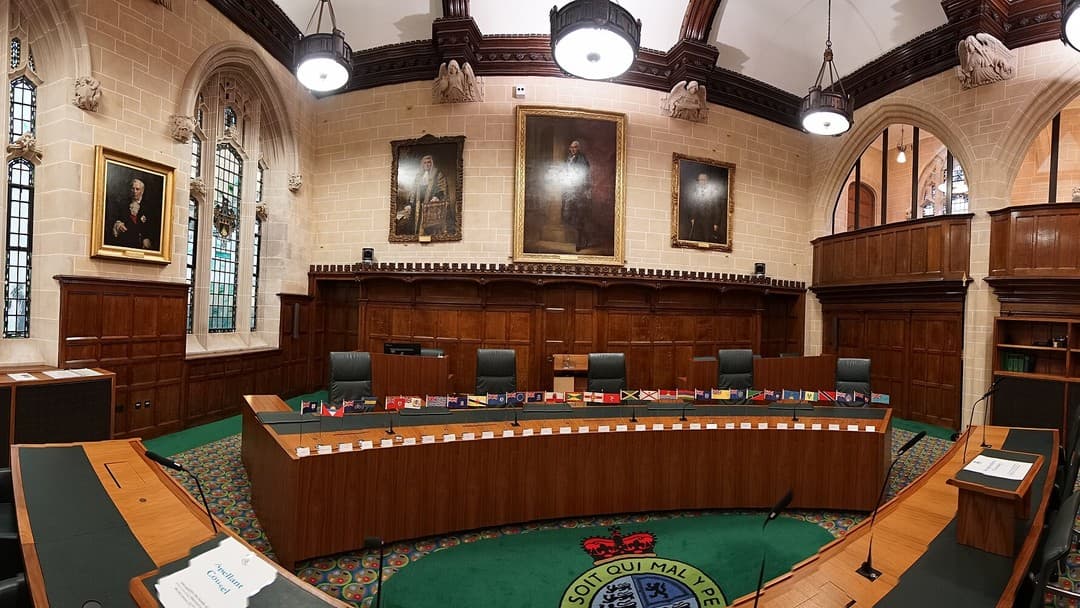
Privy Council clarifies the multifactorial test for reasonable termination notice in distributorship agreements.
In Anheuser-Busch International Inc and another v Commonwealth Brewery Ltd [2026] UKPC 8, the Privy Council dismissed an appeal arising from the termination of a long-standing oral distribution agreement in the Bahamas, providing authoritative guidance on how courts should assess reasonable notice periods when a contract contains no express termination provisions.
Commonwealth Brewery Ltd (CBL), a Bahamian brewer within the Heineken group, had distributed AB InBev products — including Budweiser — for approximately 40 years under an informal arrangement with Anheuser-Busch International Inc (ABI). In August 2015, ABI terminated the agreement on just over three and a half months' notice, citing incompatibility with its global strategy following Heineken's ownership of CBL. CBL counterclaimed, arguing the notice was unreasonable and contending that 15 months was the appropriate period.
The Supreme Court of the Bahamas accepted CBL's position, fixing 15 months as a reasonable notice period. The Court of Appeal reversed that decision, finding three and a half months fell within the acceptable range. The Privy Council agreed with the Court of Appeal.
The legal framework
Delivering the judgement of the Board, Lord Hodge reaffirmed the foundational principle from Australian Blue Metal Ltd v Hughes [1963] AC 74: whether a reasonable notice term is to be implied is assessed at the time of contracting, but the length of that notice is assessed at the time it is given. The central purpose of any such period is to enable the parties to bring their relationship to an orderly close — what McHugh JA in Crawford Fitting Co v Sydney Valve & Fittings Pty Ltd (1988) 14 NSWLR 438 termed the "chief purpose" of the notice period. Crucially, it is not the law's function to protect the recipient from all financial loss flowing from termination.
Drawing on Alpha Lettings, Zymurgorium, Decro-Wall, Hamsard and several Commonwealth authorities, the Board identified seven factors relevant to the assessment, each carrying weight only insofar as it bears upon the recipient's ability to adjust its business:
the degree of formality and establishment of the relationship; the length of the relationship; the significance of the arrangement to the recipient's overall business; the extent of dedicated financial, management and personnel investment; whether extraordinary capital expenditure was incurred specifically for the agreement shortly before termination; third-party commitments that cannot readily be unwound; and the obligation on both parties to continue performing during the notice period, which militates in favour of a shorter rather than longer period.
Application to the facts
The trial judge's principal error was treating the 15-month period over which CBL's profits had been reduced as a relevant consideration. The Privy Council confirmed that the notice period is not designed to preserve the recipient's profitability; commercial parties who rely on an implied rather than express notice term accept the attendant risk of some loss during adjustment.
Further errors included giving undue weight to expenditure on staff and warehouse refrigeration that was neither extraordinary nor attributable principally to the ABI arrangement, and failing to weigh several factors favouring a shorter period: CBL was free to distribute competitors' products throughout the relationship; ABI products represented only around ten per cent of CBL's turnover; and both parties faced the practical difficulty of being contractually bound to perform during any notice period at a time when each needed to reallocate resources.
The Board also clarified that the absence of a formal written agreement is relevant primarily as an indication that the parties chose not to stipulate a fixed period of notice — it does not independently support a longer implied period. What matters is whether the relationship was well-established and regular, rather than ad hoc, and how significantly its loss would affect the recipient's business.
The judgement provides a structured and practically useful framework for advising on termination disputes in distribution, agency and similar commercial relationships where notice periods have not been agreed in writing.
 Copyright & permissions

.jpg&w=3840&q=60)
-cropped-6au25meu.jpg&w=3840&q=60)





.JPEG&w=3840&q=60)