With the Government committed to increased spending on Defence and the potential involvement of UK military personnel in the present conflict in the Middle East, armed forces personnel continue to take a prominent role on behalf of the UK. That is only likely to increase over the weeks, months and years and to come. But while the Armed Forces command a greater degree of national pride and respect than ever before, is that reflected in the ability of military personnel to properly access the justice system? In practice those injured in service to the country experience greater difficulty seeking legal redress than their civilian counterparts.
Crown Immunity
A key issue facing older military personnel is the absolute barrier to them bringing a civil claim for injuries sustained prior to 15th May 1987. This flows from the doctrine of Crown Immunity.
Crown Immunity is a concept dating back to medieval times, following the common law maxim that “The King can do no wrong”. Whilst not restricted to military personnel, it meant those engaged in military service on behalf of the monarch could not bring a civil action for any injuries sustained as a result. Over time this became impractical and led to injustice, where injured personnel could not seek damages even in circumstances where they could demonstrate clear failings on the part of the Crown. While Crown Immunity was significantly reduced in scope by the Crown Proceedings Act 1947, section 10 created an exemption for members of the Armed Forces who were injured by another service member, or otherwise as a result of their military duties. The intention was to avoid litigation between service personnel during wartime and furthermore, to preserve military discipline and operational readiness.
It was 40 years before Section 10 was repealed by the Crown Proceedings (Armed Forces) Act 1987. For the first time this granted service personnel similar rights to their civilian counterparts, for any injuries suffered from 15th May 1987 onwards. Whilst this improved the situation for many and the number of individuals adversely affected by Crown Immunity has decreased, this still has an impact on those with longtail injuries or illnesses. Military personnel seeking to bring a civil claim for conditions such as asbestos-related lung cancer, in circumstances where some of the asbestos exposure occurred prior to 1987, are likely to find Crown Immunity raised in defence of their claim, in circumstances where their civilian counterparts would be able to proceed.
Combat Immunity
Whilst the impact of Crown Immunity has reduced over time, military personnel still face further barriers when seeking access to justice that their civilian counterparts do not face. A key example is the doctrine of Combat Immunity.
The modern doctrine of Combat Immunity was articulated in Mulcahy v MoD [1996] QB 732, where the Court of Appeal held that soldiers engaged in battle do not owe each other a duty of care in negligence.
Put simply, Combat Immunity applies where an individual is injured whilst engaged in combat operations. The doctrine states it is inequitable to hold the MoD to the same duty of care as civilians, in circumstances where that individual is engaged in active combat at the time of their injuries.
There are often sound legal reasons for this. There are few occupations where the claimant and their colleagues are actively seeking to injure or kill others, whilst facing the threat of harm and death from others on the battle field. Military personnel are deliberately deployed to hostile parts of the world to undertake their work duties. The MoD cannot reasonably be expected to manage the conditions on the battlefield in Afghanistan in the same way as a factory owner in the UK is expected to manage the conditions in which their employees work.
Furthermore, decisions that appear unreasonable after the event may not have appeared that way at the time and under the conditions in which they were taken. A commander on the ground who has not slept for a week, faced with a life or death decision that needs to be taken in a split second whilst under fire and without the benefit of all the facts, may take a different decision from the one they might have made with the luxury of time and a full set of information. It would be harsh indeed to impose on that individual a similar duty of care to someone in a civilian context, who does not face the same constraints and stresses. Decisions taken in the heat of battle are not to be judged to the same standard as those reached under perfect conditions. To hold otherwise would place military commanders in an impossible situation and inhibit their ability to operate in hostile conditions.
However, the courts have repeatedly emphasized that Combat Immunity must be interpreted narrowly. The consequence of a successful Combat Immunity defence is that it deprives an injured party of damages where they could otherwise establish fault. A balance must be struck between the need to protect those taking decisions under fire with the need to ensure decisions that should not have been taken, even after making allowances for the circumstances in which they were made, are treated as such.
The MoD has frequently sought to place a wide interpretation on the applicability of Combat Immunity, historically arguing that any injury sustained in a combat situation was automatically covered. In doing so they sought to remove any distinction between injuries sustained as a result of events and circumstances that unfolded in combat, with injuries which may have been sustained in combat, but where in reality the failure that led to the injuries took place before the individual was deployed.
An example might be the failure to issue body armour to an individual when they deploy from the UK. Whilst any subsequent injury may occur in combat, the breach of duty would not be based on the decisions of the commander on the ground, but rather the failure to ensure the individual deployed from the UK with the correct kit.
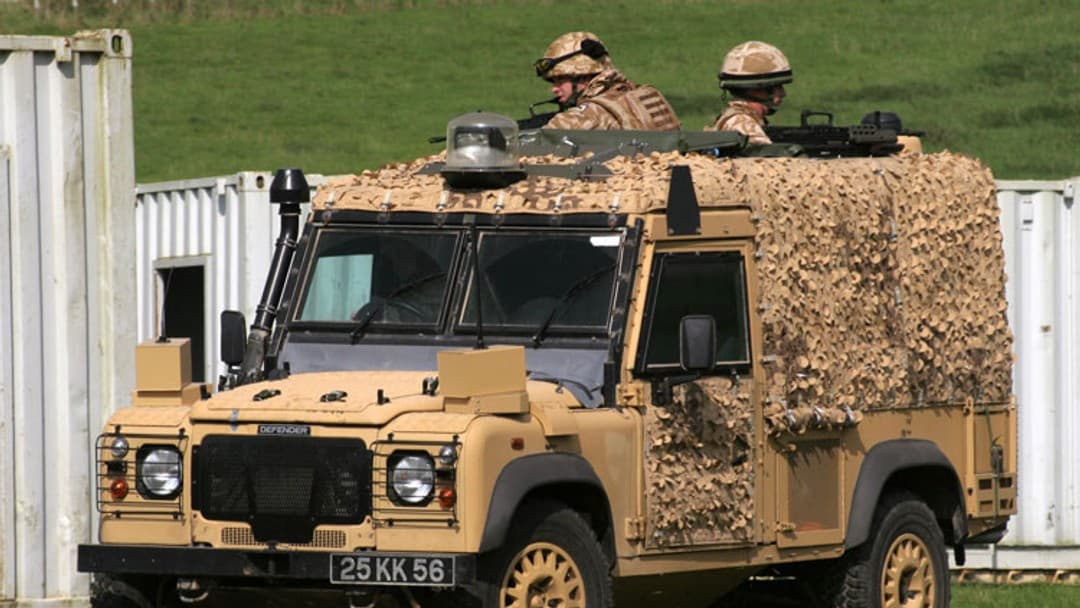
The seminal case on this is Smith v MoD [2013] UKSC 41, otherwise known as the Snatch Land Rover claims. Three soldiers were killed between 2005 and 2007 in Iraq when road side bombs were detonated by the lightly armoured Snatch Land Rovers they were travelling in. Their families brought claims against the MoD arguing they failed to provide the soldiers with adequately protected vehicles, in circumstances where they should have been aware of the risk of road side bombs. The MoD argued the claims should be struck out on the basis of Combat Immunity, submitting this applied to what were battlefield and tactical operational decisions taken during combat. However, the Supreme Court held the claims could proceed to trial. Combat Immunity was to be interpreted narrowly. Whilst it applied to decisions taken during active combat, it did not apply to procurement decisions, training, equipment provision or planning before deployment.
The consequence of this is that soldiers who can establish failings on the part of the MoD falling into these categories are not prevented from bringing a claim due to Combat Immunity.
Overseas Operations (Service Personnel and Veterans) Act 2021
The OOA was ostensibly a measure taken by the Government to reduce the impact of the decision taken in Smith. It was heralded as giving military personnel protection from investigation or prosecution for alleged historic abuse, at the time largely involving those who served in the conflicts in Iraq and Afghanistan, by introducing a statutory presumption against prosecution for most alleged offences committed more than five years previously. However, the OOA also introduced a separate six year longstop for civil claims relating to overseas operations.
An overseas operation is defined as “any operations outside the British Islands by HM’s forces which are or include operations for dealing with terrorism, civil unrest or serious public disorder, or peacekeeping operations, and during which members of the armed forces come under attack or face the threat of attack or violent resistance”.
This definition is problematic. There are situations that clearly fall within it; a soldier wounded whilst being fired upon falls squarely within this. But what about an individual wounded by a negligent discharge of a colleague’s weapon after hostilities are officially over? Or a soldier engaged in friendly fire whilst away from the recognised combat zone? There is much scope for dispute over what constitutes an overseas operation.
Where the OOA applies it represents a grave restriction on the ability of injured military personnel to access justice. The jurisdiction of the court is effectively removed in these circumstances. There is no ability for the Claimant to seek discretion from the court to bring their claim out of time and the reasons for the claim being brought out of time are not taken into account. This places military personnel at a clear disadvantage to their civilian counterparts.
Lawfare and public perception
In addition to the legislative challenges faced by military personnel seeking access to justice, there are more practical obstacles they often face.
One such barrier relates to the way the Government often seeks to portray those from the military bringing personal injury claims. A common complaint from the MoD is the engagement of lawyers representing injured personnel in “lawfare”. Whilst lawfare actually refers to the use of the legal system to achieve strategic, political or military objectives, the phrase has more recently been used rhetorically in public discourse to negatively characterize the actions of lawyers representing injured personnel. Other phrases include references to tank chasing lawyers, with injured service men and women often being associated with this and consequently portrayed as somehow being disloyal to their branch of the armed forces.
This characterization of injured military personnel seeking only to exercise their legal right to claim for an injury alleged to have been caused by the fault of the MoD is particularly unfortunate. It resonates in a community of individuals that prides itself on loyalty and there are instances where injured personnel have found themselves being encouraged not to seek damages for injuries sustained. Whilst this can also be true for those in a civilian setting, the pressure is perhaps more acute amongst those who serve.
Practical barriers
There are additional practical challenges faced by injured military personnel. Where the tools of the trade are weapons and the place of work is often remote or in a foreign land, or both, there can be particular problems obtaining evidence with which to support a legal claim. Documentary evidence may not always be held by the MoD and in some cases may lay in the possession of allied nations. Witnesses may quickly disperse and become uncontactable.
There are particular challenges facing those serving in sensitive military units. Such individuals require permission from the MoD to bring a civil claim. Whilst this is always granted, it is required to allow the MoD to preserve the sensitivity of documents and potentially of witnesses. Documents may require redaction and witnesses may need a cypher. There can be difficulty obtaining all relevant information and evidence and such individuals must also consider their obligations under legislation such as the Official Secrets Act 1989. Where relevant proceedings may need special measures and anonymity orders.
Future
There are already significant challenges to military personnel seeking access to justice that are not faced by their civilian counterparts. The world has become an increasingly unpredictable place in the last 12 months, with the current conflict in the Middle East the latest in a line of military operations conducted by the US. The increased pressure on European powers to take greater responsibility for their own defence is likely to result in increased defence budgets and a larger role for their military forces, with the UK being no exception. As the role performed by our armed forces expands, it is more important than ever that the Government preserves the ability of those injured in service to their country to access justice and seek legal redress. Any erosion of those rights would sit uneasily with the Armed Forces Covenant which recognizes that those who serve the nation should not face disadvantage as a result.


.jpg&w=256&q=75)

 Copyright & permissions